

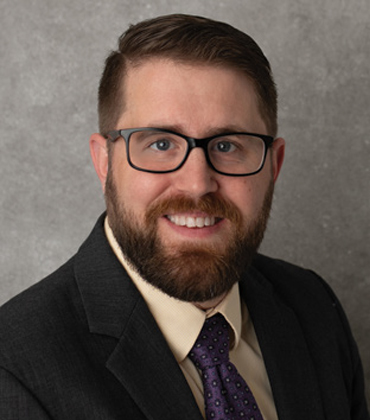
 Reid Robbins, Head of School
“Our students step into the world equipped with academic excellence, while their hearts are attuned to God's calling — ready to serve, lead and live with purpose,” says Reid Robbins, head of school.
This ethos, first envisioned by the Dutch community that founded the school, remains at the core of EPCS. Unlike institutions with rigid frameworks, the school goes beyond the standard curriculum to help students develop their individual gifts in all areas.
Here, EPCS’ covenantal framework plays a key role by integrating faith and learning through a parent-teacher partnership rather than being tied to government- or church-led authority. Their shared responsibility allows the school to nurture each child's God-given talents while creating room for doctrinal differences to be discussed in love. This commitment to a relational bond sets the tone for EPCS’ operations.
EPCS brings together families in the rural heart of upstate New York, offering the faith-based education they seek. This foundational vision extends into every element of school life — including how students are welcomed into the community.
-
Our students step into the world equipped with academic excellence, while their hearts are attuned to God's calling — ready to serve, lead and live with purpose
The process begins with an application, a home visit and a reference provided by the student’s pastor, along with a placement test to ensure the child is placed in the appropriate grade. Each step is carefully designed with the student’s needs in mind. With a maximum student-to-teacher ratio of 15:1, each child is guaranteed an advocate within the school to ensure their academic and personal growth.
To achieve this goal, the school follows a classical education model, teaching logic, rhetoric and integrated humanities with a strong focus on grammar, classic Western texts and vibrant music programs. To prepare students for reading complex works like The Federalist Papers and Confessions in high school, they begin reading foundational texts like The Odyssey in middle school, ensuring a rigorous and strategic learning path. The results speak for themselves: according to standard national testing, their students are (on average) over a year and a half ahead of the national norm, including being 1.2 years ahead in math alone.
Moreover, rather than limiting students to book knowledge, the curriculum encourages them to explore the theological roots of history, literature, politics and culture through the lens of biblical truth without accepting them at face value.
For instance, students reading A Tale of Two Cities go beyond literary analysis to compare the French and American Revolutions — contrasting the guillotine with liberty and examining their theological roots: France's exaltation of autonomous man versus the American founders' grounding in nature and nature's God — in the Creator.
The school staff supports them by fostering a close-knit, family-like environment, extending sincere love and care. Perhaps this is the reason why families never truly leave EPCS. Alumni families stay in constant touch, filled with gratitude towards the community that made them successful. Brought together by faith, they remain united through the values gained from the school’s — and Christ’s — teachings that shape their efforts, from serving in global missions to establishing new schools.
It is apt to say EPCS epitomizes Abraham Kuyper’s words, 'There is not a square inch in the whole domain of our human existence over which Christ, who is Sovereign over all, does not cry, "Mine!"'

