

Avenues The World School
Cultivating Global Citizens through Community Engagement
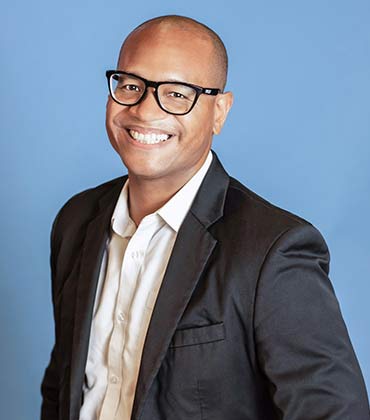
Morgan Jones
Before joining Avenues, I served in the NYC Mayor's Office and across city government, including the Community Affairs Unit, the Housing Recovery Office, which supported Hurricane Sandy recovery, and the Economic Development Corporation, where I managed Manhattan's government and community relations. I also served as COO at the US-China Strong Foundation in Washington, D.C., a nonprofit organization dedicated to expanding Mandarin language learning in U.S. K–12 schools and inspiring students to study abroad in China. Mandarin is my second language, and I lived in China for six years. These roles taught me how to build trust across diverse communities, navigate complex systems, and champion global perspectives. They align closely with Avenues' mission: fostering language fluency, global citizenship, and meaningful local engagement. Each milestone reinforced my belief that education thrives when schools and communities collaborate to prepare students as world-wise leaders.
Embracing Discomfort to Connect Global-Local Communities
One leadership habit I've carried from government, nonprofits, and global institutions is embracing discomfort. Education thrives on structure—curriculum, policies, routines—but real-world challenges can be messy and uncomfortable. Leaders, especially leaders in education, must learn to navigate ambiguity and adapt when boundaries are tested. I experienced this firsthand during my first year at Avenues, when COVID-19 disrupted learning and community life. In the face of uncertainty, we empowered students to lead meaningful initiatives, such as a mask-making project in partnership with our Mastery program, which grew from one student's passion for fashion into a team effort that produced over 500 masks for local organizations. That success required flexibility, empathy, and creative problemsolving skills, which were born from being "comfortable being uncomfortable." For me, this habit isn't optional; it's essential for building resilience and fostering authentic engagement in unpredictable times.
“Leaders in education must learn to navigate ambiguity and adapt when boundaries are tested.”
At Avenues, we frequently discuss empathy and inquiry, using these concepts as a means to build relationships and understand the people, places, and things around us. The beauty of being in NYC is that this is a global community, and we can form partnerships with local organizations that accentuate that global connection. For example, while our students are learning Spanish and likely studying abroad through our Global Journeys program in faraway places like Spain, Argentina, or Costa Rica, they are also meeting with our neighbors across the street at one of our local community centers, the Hudson Guild in Chelsea, speaking with local seniors, and developing relationships with them also in Spanish.
Long-Term Impact Beyond Traditional Metrics
For me, the strongest signal of long-term value is sustained engagement. When students, families, faculty, and community partners repeatedly express a desire to collaborate—week after week, year after year—it demonstrates that the work is authentic and lasting, not a one-time event. I also examine alumni reflections, considering what they recall and how those experiences have shaped their educational or career paths. One powerful example is our partnership with St. Clements Food Pantry, located in Hell's Kitchen just north of our school. Its manager still recalls an Avenues alum from nearly a decade ago, and that same alum, who now leads a team working on regenerative agriculture, remembers volunteering there in high school. That continuity speaks volumes. When programs establish relationships that endure across time and geography, they transcend short-term activity and become part of a shared narrative of impact.
Community engagement influences student outcomes by transforming learning from a theoretical to an experiential approach. It gives students the chance to apply knowledge in real-world contexts, building empathy, adaptability, and problem-solving skills that grades can't measure. One alum illustrated this perfectly: while studying data science in college, he noticed that while his classmates had similarly strong mathematical backgrounds, they lacked hands-on experience with low-income communities, a gap that his high school service work had already filled. He recalled volunteering at Holy Apostles Soup Kitchen, located two blocks from our school in Chelsea, and engaging with children in a São Paulo favela during a Global Journeys program. Those experiences provided him with cultural insight and practical understanding, enriching his academic work and career. Community engagement fosters confidence, perspective, and resilience—qualities that shape leaders and global citizens far beyond what traditional metrics capture.
Starting Small to Build Lasting Trust
My advice is to start small—both literally and figuratively. Literally, involve early learners in simple acts of service, like writing "thinking of you" notes to senior populations or making sandwiches for a local soup kitchen. These activities teach empathy while reinforcing academic skills, such as language, math, and science, through real-world applications. Figuratively, begin with one class, one unit, or one club (such as our Service-Learning Club), and then scale up gradually. At Avenues, one of our middle grades deans has led a grade-wide day of service each year, partnering with as many as seven organizations across Manhattan. This fall, more than 100 8th-grade students participated; next spring, we'll expand to grades 6-8, serving our whole middle grades community of over 300 students. Starting small builds trust, creates meaningful experiences, and lays the foundation for sustainable programs that unite students, faculty, families, and communities with a shared mission to make a positive impact.

Get the best of Education Insider delivered directly to you.
