

Heritage Academy of Learning Excellence
Preserving Excellence in Specialized Learning
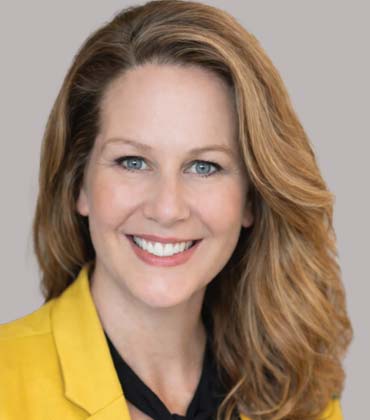
Cheryl Ward
Cheryl Ward has devoted her professional life to advancing specialized education for students with learning exceptionalities. Since joining Heritage Academy of Learning Excellence in 1995, she has grown alongside the school, moving from educator to senior leadership before earning her Principal’s Certificate through the Ontario Federation of Independent Schools in 2008.
Today, as Principal and Director, she oversees the full academic program from Grade 1 through Grade 12, guiding a school community grounded in individualized instruction, multisensory methodology, and a belief that every student can learn to read and write.
Following is the conversation we had with her.
A Journey Aligned with a School’s Vision
When I look back at my journey with Heritage Academy of Learning Excellence, it is impossible to separate my own growth from that of the school. I joined Heritage in 1995, fresh from my studies in education and psychology, deeply curious about how children learn and why traditional systems often fail to meet every learner’s needs.
What I did not yet realize was that this school would shape not only my professional path, but also my philosophy of leadership, learning, and human potential.
Over time, I moved into senior leadership roles, gaining insight into every grade level and every dimension of our community. In 2008, after earning my Principal’s Certificate through the Ontario Federation of Independent Schools, I stepped into the role of Principal and Director.
“Our work is to preserve the integrity of the curriculum while removing the obstacles that previously prevented access.”
Today, I oversee our full academic program from Grade 1 through Grade 12, ensuring that what happens in an early literacy classroom is meaningfully connected to what a student will need in secondary school and beyond.
Removing Barriers, Restoring Confidence
My responsibilities are wide-ranging, including academic programming, staff development, student support, admissions, and long-term planning, but at the heart of all of it is one guiding commitment: to safeguard our mission. Heritage Academy exists to provide a safe, structured, and transformative learning environment for students with learning differences.
That mission is not abstract. It is reflected in every timetable, every staffing decision, and every instructional approach we adopt or decline to adopt. It means that every student who walks through our doors must feel seen not as a diagnosis, but as a capable learner whose potential may simply have been misunderstood.
Balancing academic expectations with student well-being is not, in my view, a balancing act at all. The two are inseparable. Many of our students arrive having experienced repeated frustration, confusion, or even shame around learning. For them, academics cannot begin until a sense of safety is restored. Progress begins when a student feels understood. When I make leadership decisions, I ask myself a simple question: Does this remove barriers, or does it add them?
We follow the Ontario curriculum, but we deliver it intentionally and responsively. High standards matter. Meaningful expectations matter. However, standards must be accessible. If a student cannot access the material due to unaddressed learning challenges, then rigor becomes discouragement. Our work is to preserve the integrity of the curriculum while removing the obstacles that previously prevented access.
Where Diagnosis Meets the Individual Story
Over the decades, awareness of neurodiversity and learning exceptionalities has increased dramatically. That shift has shaped my leadership philosophy in powerful ways. Working with neurodiverse students has given me what I often describe as a panoramic lens. No two students are alike, even when they share similar diagnoses. Their personalities, prior experiences, emotional histories, and previous remediation attempts all influence how they approach learning.
We truly look at the whole child. If a student has tried multiple programs that were unsuccessful, we do not see that as failure; we see it as information. Why did that approach not work? Was it the methodology, the environment, the pacing, or the emotional climate? Understanding those variables allows us to refine our support. Sometimes a student’s greatest barrier is not cognitive but emotional, a lingering apprehension rooted in past disappointment. Recognizing and addressing that is part of our responsibility.
Transformation, therefore, cannot be measured solely through report cards. Of course, we monitor academic progress carefully through informal assessments, ongoing tracking, and formal evaluations. Many of our students undergo comprehensive psychoeducational or medical assessments every three to four years, and those results provide valuable data on growth and development.
Restoring a Student’s Relationship with Learning
Beyond that, I observe transformation in subtler ways. I see it when a student volunteers to read aloud for the first time. I see it when anxiety gives way to curiosity. I see it when a student who once avoided writing begins to express ideas confidently. Engagement, renewed risk-taking, and self-advocacy are powerful markers of growth. These are not always captured in traditional benchmarks, yet they are often the clearest indicators that a student is reclaiming their relationship with learning.
Two pillars have been especially influential in strengthening our culture of excellence and belonging: individualized learning and a shared instructional language. Every student at Heritage Academy has a personalized educational plan. From day one, students and families understand that we are not applying a one-size-fits-all model. That personalization builds trust and communicates dignity.
Equally important is our consistent use of Simultaneous Multisensory Teaching (SMT) and Enseignement multisensoriel simultané (EMS). These programs, combined with small class sizes and a collaborative team approach, provide structured phonemic support that has helped thousands of students develop foundational reading and writing skills.
Institutional Memory as Instructional Strength
Consistency matters deeply to our students. Many have experienced fragmented approaches before arriving here. At Heritage, the methodology does not shift with trends. Students know what to expect. They recognize the framework. That predictability reduces cognitive load and emotional stress. We do not adopt new programs simply because they are popular. We ask whether they are evidence-based, validated, and aligned with our philosophy. Our belief that every student can learn to read and write is non-negotiable. That belief is anchored in methodologies that have stood the test of time.
Maintaining fidelity to this approach requires ongoing training and alignment. I am fortunate that the founder of our program remains actively involved with the school, providing consultation and professional development. In addition, one of our longtime instructors, who has been with us for 25 years, serves as head of our SMT department and oversees training across all grades. This ensures consistency and depth in implementation. Our staff members are not simply introduced to a methodology; they are immersed in it. They understand the theory, the practice, and the nuance.
As demand for specialized education continues to rise, one of our greatest challenges is growth. Families are increasingly seeking evidence-based, structured support. Expansion is both an opportunity and a responsibility. I am acutely aware that growth must never dilute what makes our environment effective. Small class sizes, individualized attention, and calm, structured classrooms are not luxuries. They are conditions for success.
Guarding the Core While Growing the Reach
When I consider expansion, I ask: Can we preserve these conditions? Can we maintain training standards? Can we ensure that every new staff member is fully aligned with our mission? Growth without integrity would undermine everything we have built. Growth with integrity, however, allows us to serve more students who urgently need this environment.
Technology presents another evolving challenge. Education has become increasingly digitized, and technology can indeed be transformative. However, my primary criterion is simple: Does this technology improve access without increasing cognitive load or dependency? If it supports organization, clarity, or independence, it has value. If it distracts or replaces foundational thinking, we proceed cautiously.
In Orton-Gillingham-based instruction, which underpins many multisensory approaches, the one-to-one, in-person connection is foundational. We consistently observe stronger outcomes when students receive direct, in-person instruction compared with fully virtual delivery. The relational component matters. Subtle cues, immediate feedback, and human presence all contribute to success. Technology should support learning, not drive it. It is a tool, not the teacher.
Preserving relational depth in a digitized era requires intentionality. We prioritize human connection. Teachers know their students well, not just academically but personally. They understand their anxieties, motivations, and strengths. That connection builds resilience. When a student trusts their teacher, they are more willing to attempt difficult tasks. In our environment, relational safety fuels academic courage.
Our partnerships with families are equally critical. Many parents arrive at Heritage after years of uncertainty. Some feel discouraged. Some feel unheard. My priority is transparency and honest communication. We ensure families understand their child’s learning profile, progress, and options. We collaborate with external professionals, including therapists, clinicians, and service providers, to create continuity of care. The school does not operate in isolation; it is part of a larger ecosystem supporting the child.
Looking ahead five to ten years, my vision is both simple and ambitious: I want to make Heritage Academy available to more students. There are thousands of children who require structured, multisensory instruction and individualized support. We know our methodology works. We see students thrive in this environment. Expanding responsibly means more students will develop the skills necessary to navigate elementary school, high school, and post-secondary pathways with confidence.
If I were to offer one piece of hard-earned advice to fellow school leaders, it would be this: stay aligned with your values, even when external pressures push for speed or trend-driven change. True transformation takes time. It requires consistency and courage. Listen closely to the students you serve. Design around their needs, not around convenience or marketing appeal.
Leadership, at its core, is stewardship. I see myself as a steward of our mission, our methodologies, and our community. Every decision must protect the conditions that allow our students to flourish. Sustainable change is not dramatic; it is disciplined. It is built through trust, training, and an unwavering belief in student potential.
After nearly three decades at Heritage Academy, I remain deeply optimistic. I have witnessed students who once doubted themselves graduate with confidence. I have seen families regain hope. I have watched teachers grow into mentors and leaders within our community. Excellence here is not competition. It is confidence. It is the quiet, steady recognition in a student’s eyes that they can do this, that they are capable.
That moment, repeated across classrooms and years, is the true measure of our work. It is why I continue to lead with conviction, humility, and profound respect for every learner who entrusts us with their journey.

Get the best of Education Insider delivered directly to you.
