

Rosaland Turner
Building Schools where Every Child is Prepared and Empowered
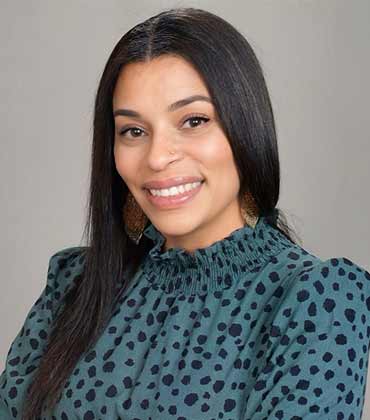
Rosaland Turner is the Principal of Monterey Heights STEAM Academy in the Lemon Grove School District. With advanced degrees in educational administration and human resource management, and extensive classroom experience, she leads a school rooted in STEAM integration, community partnership and culturally responsive education.
From Classroom to Campus Leadership
My path to the principalship at Monterey Heights STEAM Academy was built across more than two decades in education. I began as a classroom teacher for 14 years before transitioning to a STEAM instructional role after relocating from Texas to California in 2014. That move marked a shift in scope, from single classrooms to schoolwide influence, as I stepped into roles as an assistant principal and then a site principal before arriving at Monterey Heights in 2021.
When I took the position, the school was operating as a traditional elementary school. Within months of my arrival, a vision for something different had taken shape. After presenting that vision to my superintendent, the school was renamed Monterey Heights STEAM Academy, with STEAM projects implemented across all grade levels by January of the following year.
Today, my responsibilities extend well beyond day-to-day school operations. I drive the school’s shared instructional vision, which is grounded in Gholdy Muhammad’s five pursuits framework, a culturally and historically responsive literacy model built around identity development, skill development, intellectualism, criticality and joy. Those five pursuits shape every decision made at the school, from how teachers plan lessons to how the campus engages with families.
 Consistency in the Classroom without Sacrificing Teacher Judgment
One of the more persistent tensions in school leadership is the balance between instructional consistency and classroom flexibility. My answer to that tension is a clear distinction: what is taught stays consistent, and how it is taught is left to professional judgment. Teachers at Monterey Heights work within a set of nonnegotiable instructional expectations supported by a suite of highquality, standards-aligned curriculum materials. Those resources ensure that every student, regardless of classroom, has access to the same caliber of grade-level instruction. What varies is how that instruction comes to life.
Through structured grade-level meetings and ongoing coaching cycles, teachers collaboratively analyze student data, identify what is and is not working and adjust their strategies accordingly. Professional learning sessions are often facilitated by teachers themselves, a deliberate choice that builds shared ownership of improvement rather than relying on top-down directives. Current priorities include supporting multilingual learners and deepening vertical alignment in mathematics.
That data-driven culture extends beyond meetings and into daily practice. Student performance data is continuously monitored through adaptive learning platforms that track progress in both reading and math. Teachers use that data to form targeted small groups, address gaps as they appear and ensure students receive timely intervention and support.
Culture Built by Design, Not Default
I am direct about one thing: a strong school culture does not happen on its own. At Monterey Heights, the structures that support both student well-being and staff accountability are deliberately designed and consistently maintained. We operate a multi-tiered system of support that addresses academic and social-emotional needs simultaneously, ensuring that no student goes unnoticed or unsupported.
Our behavioral systems are grounded in a framework that links positive reinforcement, relationship-building and universal design for rigorous instruction. This year, we deepened that work by implementing Conscious Discipline, a social-emotional learning approach that emphasizes adult self-regulation alongside student skill-building. The model shifts our approach to discipline away from compliance and toward problem-solving, equipping students with tools to manage emotions and resolve conflict while encouraging teachers to reflect on their own responses.
For staff, accountability is tied to collaboration instead of evaluation alone. Structured data cycles, classroom observations and coaching conversations create a culture of continuous improvement. Alongside those systems, recognition and celebration of both student growth and effective teaching practice remain a consistent part of how we sustain our culture over time.
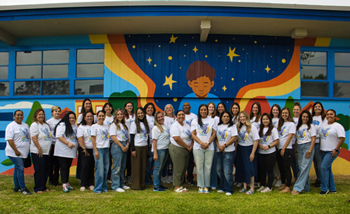
The culture at Monterey Heights is built collectively by an exceptional team of educators, support staff and leaders who share a deep commitment to students and families. Collaboration, trust and shared ownership are foundational to the school’s success, and that culture is reflected in the relationships staff build with students every day. I firmly believe that schools thrive when staff members feel valued, supported and connected to a shared vision.
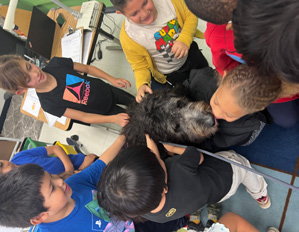
An important part of our campus culture is Gus, our emotional support dog, who provides comfort, connection and emotional support to students throughout the school day. Gus has become a beloved member of the Monterey Heights community and often helps students feel calm, safe and emotionally regulated during moments of stress or anxiety. His presence reflects our commitment to supporting the whole child and creating environments where students feel emotionally secure and connected.
Students frequently interact with Gus during classroom visits, counseling support and schoolwide activities. These interactions help build emotional awareness, reduce stress and strengthen students’ sense of belonging on campus. For many students, Gus represents comfort, consistency and joy within the school environment.
Technology as Infrastructure Instead of Novelty
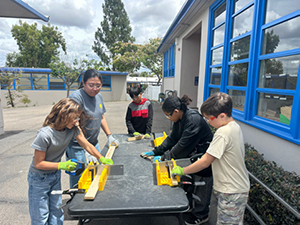
As a STEAM school, we treat technology as a foundational part of the learning environment rather than an add-on. Every student has access to a personal laptop, and classrooms are equipped with interactive display boards. The guiding principle, however, is not access for its own sake. Technology here is evaluated by how purposefully teachers use it, not simply by its presence.
Teachers use digital tools to model, differentiate and make content more accessible. Adaptive learning platforms provide individualized learning pathways, and teachers regularly review that data to inform small-group instruction and adjust pacing. For multilingual learners, technology expands access through translation tools, captioning, audio support and visual content, directly supporting our broader multilingual learning strategy.
Gizmos & Gadgets STEAM Lab
Students engage in projects that include coding, robotics, engineering design challenges, makerspace construction, 3D printing, woodworking and digital innovation. These experiences are intentionally connected to grade-level standards while also exposing students to future-ready career pathways. Whether students are designing structures in the makerspace or safely learning woodworking techniques, they are developing confidence, persistence and critical thinking skills that extend far beyond the classroom.
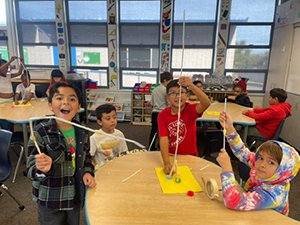
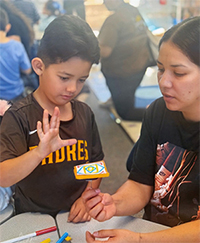
In one Gizmos & Gadgets STEAM Lab lesson, students worked collaboratively to design and test standing structures using simple engineering materials. Activities like these help students explore concepts such as balance, stability, design thinking and teamwork while encouraging curiosity and joyful learning. Through handson exploration, students learn that innovation often begins with experimentation and perseverance.
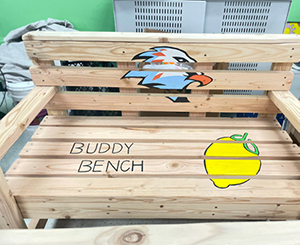
One woodworking project we are especially proud of is our students designing and building Buddy Benches for schools across the Lemon Grove School District. Through this project, students not only developed technical and engineering skills, but contributed to creating more inclusive playground environments as well, where students have a visible space to seek friendship, connection and support.
Beyond instruction, application remains essential. Our STEAM program is designed to ensure students see themselves as creators, innovators and problem-solvers capable of making meaningful contributions to their communities and future careers.
Addressing the Whole Child through a Community School Model
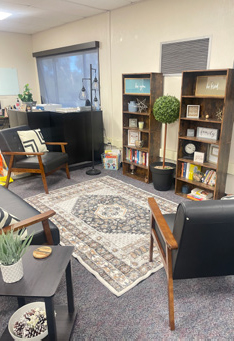
I view the greatest challenge in K-12 education today as meeting the full range of students’ needs, academic, mental health and access-related, without treating those needs as separate concerns. At Monterey Heights, our community school model brings those dimensions together under one roof.
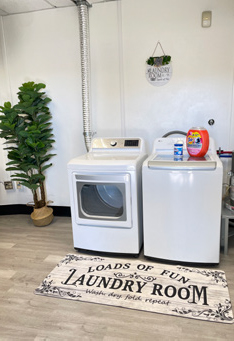
We operate a Family Resource Center where families can access food, clothing, job support and resume assistance. A fully functional on-site laundry facility was added after we identified that some students were missing school because they lacked clean clothes. These are not incidental services. They reflect a deliberate institutional decision that removing barriers to attendance and belonging is as much a part of our work as curriculum delivery.
“Innovation only matters if it stays tied to the children it serves and the futures they are working toward.”
Our community garden serves as both an outdoor classroom and a symbol of growth, sustainability and connection. Students participate in hands-on learning experiences involving planting, harvesting, environmental science and nutrition while developing a deeper understanding of responsibility and community stewardship. The garden reflects our belief that meaningful learning experiences can happen both inside and outside of the classroom.
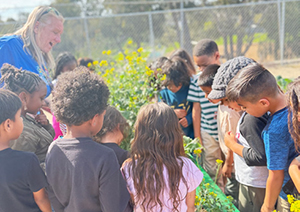 STEAM Family Fridays open our campus to the broader community. Families participate alongside their children in STEAM-based projects, interact with community partners and engage in experiences that connect learning to real life. We have hosted petting zoos, demonstrations from fire and police departments and physical wellness activities, all within a campus environment intentionally designed to feel welcoming and accessible.
What Future-Ready Leadership Requires
 My advice to fellow principals begins with clarity of purpose. Student-centered decision-making is not a philosophy to aspire to but a daily operational standard. Every instructional, cultural and resource decision at our school is evaluated against a single question: what is best for students, academically and socially?
I also place significant emphasis on investment in teachers. Strong instructional coaching, meaningful collaborative planning and professional learning that is both rigorous and responsive to teacher needs are the conditions that turn a school’s vision into classroom reality. In my experience, teachers who feel supported and valued consistently rise to high expectations.
The third element is a willingness to take strategic risk. Future-ready schools cannot be built solely on traditional models. Whether through STEAM integration, community partnerships or culturally responsive practices, innovation must be a standing expectation rather than an occasional initiative. Innovation only matters if it stays tied to the children it serves and the futures they are working toward.

Get the best of Education Insider delivered directly to you.
