

Nicky Ramos-Beban, Ph.D.
From Factory to Family: Transforming Public Schools
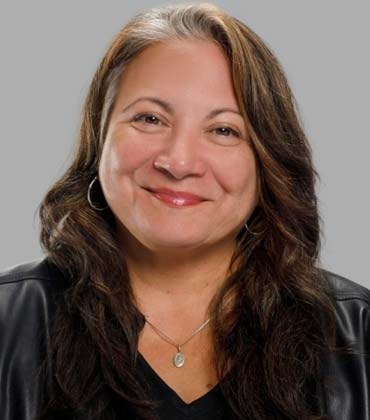
Nicky Ramos-Beban, Ph.D., chief academic officer at TUTORWORKS, Inc., is an education leader, a former English teacher and the founding principal of East Palo Alto Academy and Small Schools by Design. She is a Stanford graduate who has spent her career designing smaller, relationship-driven public schools where every student is well-known and supported to achieve. Her work spans classroom instruction, teacher development, school leadership and public school transformation and she has taught pre-service teachers at Stanford and San Jose State Universities since 1999.
On a Mission to Ensure Every Student is Known
About ten years into my teaching career, my colleagues and I began noticing a pattern. Even in large schools with talented educators, the system offered no guarantee that every student was well-known by at least one adult. Decades of research confirm what we saw every day. Students thrive when an adult understands their academic, social and emotional needs and can respond with meaningful support. Many students find that person through a coach, a teacher or a counselor. Too many never do and move through school as names on a roster.
The structure of most public schools makes this outcome predictable. Campuses are too large. Students change teachers every year and often every hour. Counselors carry caseloads of 500 students. The traditional factory model pushes students forward until they fall behind or are sidelined. I wanted something different. I wanted to build a school where teachers could stay connected to students long enough to know them deeply and have a better chance of meeting their needs.
That vision shaped East Palo Alto Academy, the public charter high school I helped found in partnership with Stanford University. We built it on a family-style model rather than a factory-style one. The results were unmistakable. Our ninth graders entered reading at an average sixth-grade level and 66 percent had no parent with a high school diploma. Four years later, over 95 percent graduated on time and almost all went on to colleges and universities. Those outcomes continue to guide how I lead today. I put people first and design structures that make strong relationships possible in person and even in virtual environments.
The Family Model for Schools
To transition a school to a family model, start with cohorts. Cohorts are groups of students who move through core classes together with the same teachers. This approach works across grade levels. In elementary schools, one teacher takes responsibility for a group of students for one or more years. But by middle and high school, students see up to seven teachers a day. Cohorts disrupt this model so that students stay with teachers for one or more years. Teachers learn what motivates each student, how they learn and what support they need over time.
Then, add advisory. Every teacher takes responsibility for 15 to 20 students and supports them academically, socially and emotionally for two or more years. A counselor with five hundred students cannot provide that level of attention. Without advisory, a student is noticed only when a parent advocates or an adult happens to take interest. Advisory builds this connection into the school’s design instead of leaving it to chance.
“To save public schools, we must transition from the factory model to the family model and embrace family-style school structures where students and teachers thrive. “
The numbers make the case. On average, a public school teacher with five classes of 25 students carries a caseload of 125 students. Cohorts and advisement reduce that to 100 students per teacher, with each teacher’s advisees known exceptionally well.
What Happens when Students are Truly Known
At East Palo Alto Academy, relationships deepened year after year. By senior year, students called their advisor when they were running late or needed help because they knew exactly who to turn to. After two years, we asked students whether they wanted a new advisor. Most said no. Their advisor had already visited their home, met their family and earned their trust.
Teachers thrived as well. They stayed with their advisories through graduation and often remained at the school longer to see the next group of students through. Smaller caseloads because of cohorts gave teachers time to collaborate. They aligned instruction across English, history, science and math.
The family model works at large comprehensive schools, too, such as Hillsdale High School in San Mateo, California, which reorganized into four small schools. Each one has its own cohorts, teachers and advisory system. A vice principal who had worked at East Palo Alto Academy brought the model there and it has held for two decades.
Creating the Conditions for Real Change
Adopting the family style model is not easy, but the results are school-changing. Because cohorts group students so they share the same teachers across classes, teachers can collaborate with colleagues to develop plans that meet students’ needs. By design, cohorts create professional learning communities among teachers and can reduce a teacher’s total caseload.
Advisory asks teachers to take responsibility for a group of young people and shepherd their academic, social and emotional growth. Two decades after graduation from East Palo Alto Academy, students still say their advisor is one of the main reasons for their success. Teachers who experience advisory see how profoundly it changes a school’s culture and their professional experience, leading directly to increased teacher retention.
Transforming a school from the factory model to the family model can be done without additional funds, but the impetus to undertake this shift must be provided. My dream is to start a foundation that gives multi-year grants to public schools for family-style conversions. Funding will be tied to student cohorts, advisory and smaller class sizes. Teachers should decide which sections to adjust or reduce to make room for advisory. When educators make those decisions, they stay invested in the outcome.
Money alone does not create a vision, but it creates the conditions for people to act on one.
Advice to Fellow Educators who Want to Think Small
Start with cohorts. Consider advisory. Find the time for deeper conversations about what matters most so that every student is held to a high bar with enough support to reach it.
Public education is losing families to private schools for two reasons. The classroom size is too large and students do not receive enough individual attention. Children need to be well known by one adult and by school cohorts and advisories can make this possible. Transitioning from a factory model to a family model is how the U.S. will reap rewards on our investment in education by transforming schools into places where youth and adults both thrive.

Get the best of Education Insider delivered directly to you.
