

John Burgess
Building A Proactive Culture of Safety and Preparedness
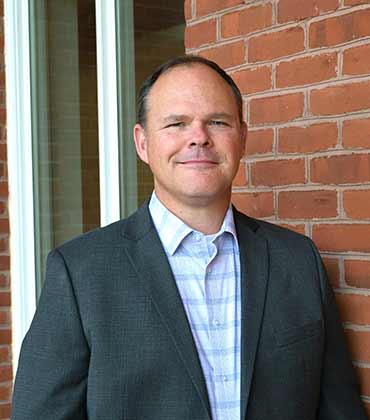
John Burgess is the Director of Security and Facilities at Spartanburg Day School with more than 25 years of law enforcement experience. A former criminal investigator and certified Public Safety Bomb Technician, he oversees campus safety, facilities, emergency preparedness, transportation and operational security across the school community.
My law enforcement career began in 1998 with the Greenville County Department of Public Safety. In 2003, I joined the Spartanburg Police Department, working Uniform Patrol before transferring to Criminal Investigations. Over the years, I received recognition, including the Solicitor’s Award for Law Enforcement Excellence from 7th Circuit Solicitor Barry Barnette and recognition from the United States Attorney’s Office for investigative work on the S.C. Upstate Financial Crimes Task Force.
In 2015, I joined the Spartanburg County Sheriff’s Office and became a certified Public Safety Bomb Technician. I graduated from the FBI Hazardous Devices School in Huntsville, Alabama, where I was highly trained to detect, render safe and dispose of hazardous devices, including Improvised Explosive Devices, Radiological Dispersal Devices and Improvised Nuclear Devices. I also developed expertise in HME, ADET and Post Blast Investigations through training conducted by the Federal Bureau of Investigation and the Bureau of Alcohol, Tobacco, Firearms and Explosives.
In 2023, I retired from law enforcement and one week later began my new journey at Spartanburg Day School as Director of Safety and Security. I had already worked with the school for years as a contract employee before transitioning to a full-time role. And in 2025, I was also asked to oversee facilities. Security and facilities are intertwined, so it made perfect sense operationally.
Preparedness Requires Operational Discipline
The biggest gap between school safety policies and real-world preparedness is complacency. The “Nothing will happen here” mindset. You must forgo that mindset entirely.
I give our staff a scenario and ask them to think. How would you handle the situation? Do you have a plan? Do you know what to do?
It can be a train derailment, a chemical spill in a science lab, a gas leak from an HVAC unit or a student experiencing a medical emergency. Do you know where the closest AED is? Intruders are not the only emergency that schools face. Have a plan and spend 5 minutes a week rehearsing it in case of an emergency.
“The best safety measure we’ve put in place isn’t a camera or a sensor. It’s the culture of collective vigilance across our campus.”
Provide teachers with the tools and training they need to be prepared. Have devices to barricade doors. Have blinds on classroom windows. Conduct school-wide training for all staff, including your facilities team and frequent substitute teachers.
Building Practical Safety Systems
Before I started full-time, I worked with the school on upgrades. We worked on additional security camera placement, two-way communications, emergency procedures and access control improvements.
At the time, several teachers were still taking attendance on paper. Student drivers were signing out on paper. There were no checkout procedures for after-school care. During an emergency, someone would have to locate a clipboard before evacuating or seeking shelter.
We modernized that.
We implemented a visitor management system connected to our accountability platform, electronic sign-out procedures for after-school care and electronic sign-in/sign-out procedures for summer camps. We replaced AEDs that were more than 20 years old, added tourniquets and first-aid equipment, installed classroom door barricade devices, and established off-campus evacuation and reunification locations.
We also implemented real-time safety software to account for students, staff and visitors during emergencies or drills.
Technology That Works
Technology has evolved from door access control to cameras, metal detectors, gunshot-detection devices, and now bulletproof doors. Private schools do not have deep pockets, so they must invest in effective measures that actually work.
Door access control, surveillance and monitoring, perimeter protection, enhanced notification systems and digital signage are a must for any school. Those are common-sense proactive approaches for schools.
Our school uses facial recognition software, so once we conduct a threat assessment, we can proactively monitor in real time across campus.
Since everyone has a cell phone, any staff member can start the initial notification process directly from an app on their phone. That starts a campus-wide notification and accountability process. Staff can then provide additional information in real time from their phones. Every staff member, student and visitor must be accounted for using our accountability application. Then you do not have to worry about who grabbed the paper roster.
Safety Is Everyone’s Responsibility
School safety is everyone’s priority. Parents expect schools to have a plan of action and properly execute emergency procedures. Students have responsibilities as well. If they see someone unfamiliar on campus, they should say something. If they see a door open, they should close it. Students need to take drills seriously and report the most serious, or even the least serious incidents.
Everyone including students, staff and parents, must be proactive with safety and security. Too many times, organizations become reactive. It takes all three to problem-solve and reach a resolution before an avoidable event occurs.
Relationships Build Trust
Students are your best source of information. They must trust you, and you must listen to them. If they tell you something, you must take it seriously, especially when it involves safety.
The more you interact with students, listen to them and engage with them, the more they respect you. When Upper School students ask me to join them for lunch every day, it proves I am doing something right.
Our school is unique because we serve students from 2K through 12th grade. It makes my day when I walk down the hall or out to a learning cove and a three-year-old says, “Hi! Officer Burgess.” Then I hand them a sticker that confirms they are a Junior Officer at SDS.
Fostering a relationship at that age creates meaningful connections throughout the years at Spartanburg Day School.
Ultimately, the best safety measure we have put in place is not just a single piece of hardware or software. It is the shift toward proactive community ownership of campus security. Our teachers, coaches and staff feel empowered to identify potential risks and help resolve them.
That culture of collective vigilance is what I am most proud of because no matter what the day brings, our focus remains exactly where it should be: on the students.

Get the best of Education Insider delivered directly to you.
