

Ennis C Harvey
The Human Equation of Leadership
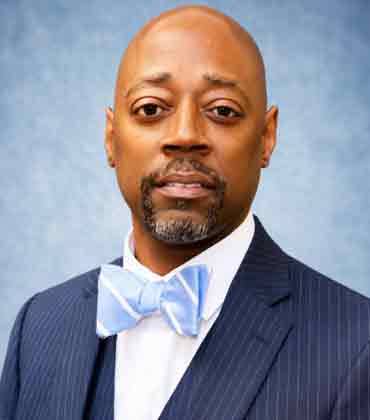
Ennis C. Harvey, Chief of Staff at DeKalb County School District, stands at what he calls the intersection of “information, intuition and intent.” He has spent more than three decades in education, beginning as a special education paraprofessional, becoming an assistant principal and moving into district leadership.
Translating Vision into Coordinated Action
Harvey's role places him across virtually every level of district decision-making. He works closely with the superintendent and division leaders to keep priorities aligned and barriers from slowing execution.
His responsibilities include morning stand-ups with district chiefs, daily downloads and senior cabinet meetings that keep priorities visible and surface critical issues. He also prepares senior cabinet agendas and works closely with the communications chief on responses to internal and external stakeholders.
Teaching and learning sit at the center of Harvey’s decision-making. He considers how district decisions affect student learning, safety and well-being while treating parents and community members as partners in supporting schools.
Harvey applies the same student-centered philosophy to accountability. In monthly strategic meetings, he reviews each division’s progress against goals and metrics, focusing on whether targets are met and what happens when they are not. These discussions encourage teams to pause, reassess and consider a better way forward.
Leadership Rooted in Humanity
Harvey’s approach to leadership is rooted in trust. He sees trust as a two-way street, believing leaders must give it before expecting to receive it. A trusted environment allows colleagues to have difficult conversations without making them personal.
His belief in meeting people where they are comes from understanding that everyone has different needs and requires different support. A mentor reinforced this perspective, teaching him that a good leader sees black and white, while a great leader also sees the gray. Harvey carries this understanding into his leadership, helping people move forward while keeping humanity at the center.
“ A trusted environment allows colleagues to have difficult conversations without making them personal. ”
Today, Harvey’s work with the DeKalb County School District superintendent is guided by clarity, consistency and coherence. The superintendent provides the vision, while Harvey builds systems that translate it into action.
The Discipline Behind Effective Leadership
The district’s “6, 7, 8, 9, and 10” goals give Harvey a framework for translating vision into measurable outcomes.
- 6: 60 percent of middle school scholars will complete one Carnegie unit course.
- 7: 70 percent of high school students will complete at least one AP, IB, dual enrollment or work-based course.
- 8: 80 percent of scholars in grades three through 10 will achieve grade-level reading proficiency.
- 9: The district aims for a 90 percent graduation rate.
- 10: 100 percent of graduates will have a 4E plan covering enlistment, education, employment or entrepreneurship.
Harvey looks beyond diplomas, ensuring students have clear plans for what comes next. He monitors progress while keeping students’ academic, social and emotional needs central. Managing his responsibilities has also taught Harvey to prioritize. With competing demands throughout the day, he has learned to step back, breathe, gain perspective and decide what needs attention first. For him, pausing is not a retreat but a way to return with greater clarity.
Embracing Change Without Losing the Human Element
Harvey sees AI as an educational tool while keeping human judgment at the center. He recognizes the district must embrace it for students to remain globally competitive, but AI cannot capture the full human experience or become something people depend on.
He hopes to sharpen his leadership skills and ultimately become a superintendent, while creating conditions where students have elevated experiences and staff can thrive.
After 31 years in education, Harvey advises emerging leaders to lead with love, integrity and a commitment to giving their best. Seeing former students become teachers and administrators has reinforced his belief that leaders may never know who they influence or the lasting impact they leave.
He measures leadership not by title, but by the life and legacy that follow. His question remains, “Did I live with love, joy, excellence and a deep moral commitment to the work?”

Get the best of Education Insider delivered directly to you.
