

Dr. Ronnie Hopkins
Embracing a Holistic Definition of Student Success
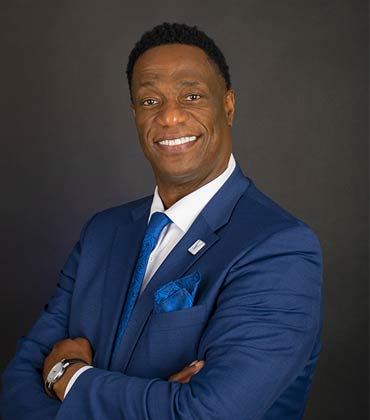
In an interview with Education Insider, Dr. Hopkins shared insights on advancing holistic student success while sustaining long-term institutional strength. He also emphasized the role of faith-based education and community engagement.
Transforming Enrollment Strategy into a Student-Centered Ecosystem
When I assumed the presidency of Voorhees University, my focus was clear: student success and institutional resilience. These priorities are inseparable; one cannot thrive without the other. At Voorhees, we define student success holistically. It encompasses academic achievement, career readiness, spiritual formation, leadership development, and economic mobility. This approach ensures that every decision, from faculty hiring to program development, directly contributes to the outcomes we envision for our students.
Institutional resilience is equally critical. It is not enough to nurture our students; we must secure the long-term viability of the university itself. This requires disciplined stewardship, aligning mission with financial margin, maintaining operational efficiency, and diversifying revenue streams. The strategy is embedded in measurable goals, articulated performance metrics, and constant review. If an initiative does not deliver on its promise, we reassess until it meets our mark.
Enrollment today is both art and science. In my fifth year, we transitioned from a reactive model to a data-informed, student-centered ecosystem. Our first step was strengthening recruitment pipelines through dual enrollment programs, high school partnerships, and leveraging our Episcopal HBCU identity to reach families seeking values-based education.
Yet recruitment alone is insufficient without retention. To sustain enrollment, we implemented early alert systems, strengthened academic advising, and improved financial aid counseling. We also established emergency funds for students facing unexpected hardships—whether a car repair or medical expense—that could derail their education. Tracking the impact of these interventions is vital. By analyzing persistence rates, GPA improvement, and time-to-degree, we ensure that each dollar spent drives tangible results.
Academic differentiation was another key priority. We aligned programs with workforce demands, particularly in emerging fields such as artificial intelligence, literacy, business innovation, and healthcare, while maintaining a strong liberal arts foundation. Graduate programs were expanded to create clear pathways from bachelor’s to master’s to doctoral education. This strategy not only strengthens our academic offerings but also demonstrates to prospective students that Voorhees provides continuity and advancement opportunities.
We also embraced global engagement. Partnerships in Ghana, Ethiopia, Kenya, Barbados, and beyond have brought international students to our campus while broadening our students’ perspectives. We want our students to understand their place in a global context, developing the skills to lead across cultures and continents.
Finally, storytelling has become a strategic tool. The legacy of Elizabeth Evelyn Wright, our founder and the first African-American woman to establish an HBCU, embodies dedication, vision, and absolute commitment to calling. Sharing this story authentically communicates our mission and values to prospective students, creating a compelling narrative that resonates with families seeking meaningful education.
Measuring Impact beyond Graduation
Graduation is a milestone, not the finish line. Voorhees serves many first-generation college students, and we must prepare them not just to earn a degree but to thrive in life and career. Measuring real-world impact is critical. We track job placement rates, graduate school acceptance, alumni earnings, leadership engagement, internship participation, and community service. Every undergraduate is required to complete 120 hours of experiential learning, integrating career readiness directly into the curriculum rather than isolating it in a single office.
This holistic approach emphasizes ethical leadership, civic responsibility, and lifelong learning. Reporting these outcomes transparently through annual reports, board dashboards, employer testimonies, and alumni narratives ensures our stakeholders see the evidence of return on investment.
Operational Discipline and Accountability
Operational discipline is the foundation of stability. At Voorhees, we link departmental budgets to strategic priorities rather than historical precedent, utilize clear key performance indicators for all unit leaders, and conduct quarterly performance reviews. Capital planning is aligned with long-term sustainability, and we invest in systems modernization to integrate data across admissions, student services, and finance.
However, metrics alone do not guarantee accountability. True accountability stems from ownership. Early in my tenure, we found that while KPIs were being tracked, they were not always internalized by leaders, and reporting did not consistently lead to action. We addressed this by tying KPIs directly to individual performance expectations and resource allocation, improving transparency and reinforcing consequences for inaction. Annual leadership retreats now give units the opportunity to contextualize their data and outline action plans, strengthening a culture of accountability.
Navigating Mission-Market Tensions
Leading an HBCU with a unique Episcopal identity presents inherent tensions. Our mission calls for affordability and access, while financial realities demand tuition revenue. The pressure to rapidly credential students for market demands can conflict with our emphasis on holistic formation. Balancing these tensions requires discipline, clarity of purpose, and consistent communication of our value proposition— not just employment outcomes, but transformational impact.
Workforce-aligned programs also carry the risk of short-term market distortion. One-year fads can overshadow enduring academic integrity. Our approach emphasizes durable skills—critical thinking, communication, ethical reasoning, and technological adaptability. Faculty engagement in curriculum design ensures that market trends inform but do not dictate standards. Our goal is to prepare students to lead within the market and beyond, rather than chase ephemeral trends.
Lessons Learned and Strategic Reflection
Reflecting on my journey, I recognize moments where alignment of mission and margin required difficult choices. For instance, evaluating low-enrollment programs connected to our legacy challenged both internal sentiment and external perception. While some programs had historical significance, they were not financially sustainable. Redesigning, consolidating, or pausing them allowed us to redirect resources to high-impact initiatives while safeguarding long-term mission fulfillment.
“Dr. Ronnie Hopkins is a seasoned higher education leader with expertise in academic administration and strategic planning. He advances institutional growth while guiding initiatives that expand opportunities for students, faculty and the community.”
In terms of donor engagement, I have learned the importance of proactive communication and shared understanding. Rapidly addressing urgent challenges without fully engaging donors occasionally led to misalignment or resistance. Going forward, I would invest more time upfront in relationship building and change management, ensuring that strategic initiatives gain full stakeholder buy-in.
Structural Change and the Future of Higher Education
Higher education, particularly HBCUs and minority-serving institutions, must embrace structural cost realignment. Many operate on legacy models assuming stable enrollment and public funding, neither of which is guaranteed. Leaders must rethink administrative structures, delivery models, and credentialing frameworks. Shared resources, strategic partnerships, and innovative approaches to education will be essential. Avoiding these necessary transformations only delays institutional evolution.
One of the most humbling milestones during my presidency was the $19 million gift from Mackenzie Scott. The gift was not solicited; her team recognized Voorhees as a stellar HBCU due to the extraordinary work accomplished at our institution. The funds have allowed us to invest in stability, sustainability, and growth for generations to come. Recognition of this nature reinforces that disciplined, mission-driven leadership resonates far beyond the campus walls.
Guiding Principles for New Presidents
If I were advising an incoming university president, my first recommendation would be mission clarity. Understanding who you are, whom you serve, and aligning every decision with that identity is non-negotiable. Leadership today demands courage, strategic agility, financial literacy, and spiritual grounding. Serving as a president is not merely a position; it is a calling, a ministry that requires unwavering commitment and the willingness to make difficult decisions. Institutions thrive not through preservation but through positioning for their next generation of impact.
At Voorhees University, leadership is a balance of vision and pragmatism, heart and discipline. Our students’ success, measured holistically and sustained through operational excellence, remains our north star. Every strategic initiative, every dollar invested, and every decision made is anchored in the promise that Voorhees will continue to cultivate leaders, innovators, and changemakers for generations to come.

Get the best of Education Insider delivered directly to you.
