

Christi Crittenden
Building a School with Values, Persistence and Purposeful Learning
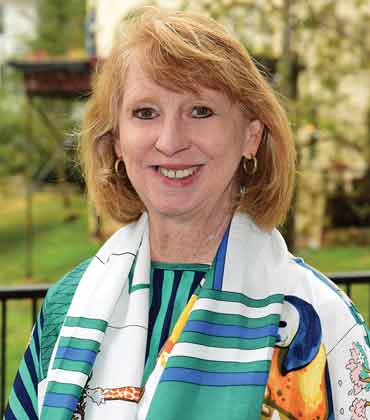
Christi Crittenden is the executive director and founder of Anna’s House School. With two decades of experience in early childhood education, she helped launch a new private school during the height of the pandemic under a timeline most leaders would consider unrealistic. Today, her focus remains clear: small class sizes, strong teacher support, thoughtful use of technology, and a culture rooted in shared values. Here is our conversation with her.
Building a Resilient School Model in a Time of Disruption
For nearly a year, I researched and developed a business plan to open a preschool. Early childhood education has been my professional focus for more than two decades, and the plan was designed with flexibility built into its governance structure from the start, including adaptable bylaws and incorporation documents.
Then the pandemic forced an unexpected strategic pivot.
When the most established private school in our community eliminated its lower grades due to COVID and financial pressure, families were left without viable options. In that disruption, families needed an immediate solution. A teacher from that school approached me about opening a private elementary program, with just three months to execute. At that point, we had no location, staff or infrastructure. What we did have was clarity. From the outset, we made a defining leadership decision. The school would be built to remain open.
“Live your values, stick to your mission, and put one foot in front of the other.”
We followed the strictest public health guidance available and structured the organization as a licensed childcare center. This allowed us to operate as an essential service when others could not. That decision shaped every operational choice that followed. Securing a location within the first month was critical. One site stood out as the right long-term fit but exceeded our budget. When we reopened the conversation, both sides aligned quickly. The lease was adjusted the same day, and the partnership moved forward. That alignment, combined with disciplined execution, allowed us to meet licensing requirements by September 1 and open the day after Labor Day in 2020.
Anna’s House opened in person, five days a week, and did not close once during that first year. We remained COVID-free throughout. That outcome was not accidental. It was the result of intentional structure, governance, and operational discipline under pressure.
Rising Pressure on Schools Requires Structural Rethinking
One of the most pressing challenges in education today is the imbalance among regulations, classroom sizes, and student needs. In many systems, particularly public education, regulation continues to increase while teachers are expected to serve larger classrooms with more complex behavioral and developmental profiles.
Our students’ needs are more complex than ever, and behavioral challenges continue to increase. Meanwhile, educators are being restricted rather than supported. We cannot continue operating under a model that is no longer sustainable.
At Anna’s House, we intentionally operate differently. We keep class sizes low, build strong support systems for teachers, and manage costs efficiently to maintain long-term sustainability. Most importantly, we avoid overregulation at the classroom level. Teachers are trusted to teach creatively and to adapt and respond to students in real time. That trust is foundational to performance.
Teaching Technology without Letting Screens Lead Learning
Technology adoption in education has accelerated rapidly because it is scalable and efficient. But efficiency does not automatically translate into effective learning. Children do not learn best when screens drive instruction. Schools need to distinguish between teaching technology and outsourcing learning to it.
At Anna’s House, students spend intentionally significant time away from screens. When technology is used, it is deliberately introduced to teach digital literacy rather than to encourage passive consumption. Our STEM program emphasizes hands-on learning, systems thinking, and foundational understanding. We are actively expanding this work through grant development to ensure STEM education is embedded from preschool onward.
Looking ahead, the education sector will move toward less screen dependence and more intentional technology instruction. Students need to learn how technology works, not just consume it. I also expect mastery-based learning and applied problem-solving to matter more than memorization, and I feel Anna’s House is positioned to lead this shift.
Culture, Governance, and Whole Child Development
Strong organizational culture begins with respect and accountability. I hire experienced, capable educators and treat their expertise as a strategic asset. While leadership requires clear decision-making boundaries, our environment is not top-down. Input is expected, valued, and acted upon. Clarity around the purpose behind decisions matters. Teams perform better when choices are transparent and mission-aligned.
As part of that commitment, we are currently pursuing accreditation through Middle States Association. This process has required deep operational review, including transparent fiscal analysis. For mission-driven organizations, governance and accountability are credibility mechanisms that strengthen trust and performance.
We also prioritize whole child development. Our students benefit from dedicated instruction in STEM, music, visual arts, Spanish, and physical education that focuses on health rather than competition. We have also introduced theater instruction because confidence and public speaking skills matter. Students benefit when those skills are developed early.
Underlying all of this is our shared practice of Habits of the Mind. These habits guide both students and adults, reinforcing persistence, reflection, and intentional action across the organization.
Guidance for Leaders of Mission-Driven Education Organizations
Leadership in education demands persistence and clarity of values, particularly in periods of uncertainty. The lesson I come back to is simple: live your values, stick to your mission, and put one foot in front of the other. Hire exceptional people and respect their expertise. Hold the organization accountable to shared values. When adults consistently model these values, students internalize them in meaningful ways. The future of education will be shaped by leaders willing to align structure, culture, and learning around what children actually need, not what is easiest to deliver. That is the work we are committed to at Anna’s House, and it is the standard we believe the sector must continue to raise.

Get the best of Education Insider delivered directly to you.
