

Chris Kuncl
Running a Rural School where Everyone Has a Role
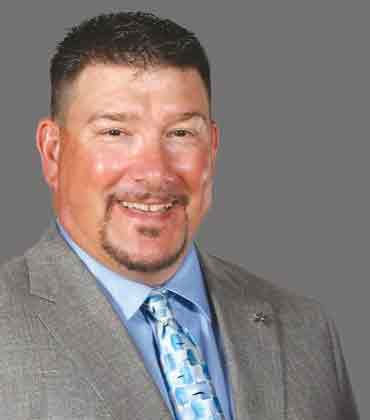
Chris Kuncl has led Mullen Public Schools since 2018, serving as superintendent, CFO and transportation director. A Nebraska educator for 25 years, he is executive director of the Nebraska Schoolmasters Club and past president of the Nebraska Rural Schools Community Association.
At Mullen Public Schools, Chris Kuncl’s role reaches beyond academics. He takes care of the people, operations and other responsibilities that keep a rural district running. Covering 1,383 square miles of Nebraska’s Sandhills, the district serves a largely rural population where the school plays a central role in daily life. Kuncl had long wanted to lead in a smaller school setting, drawn to the values and close connections that small-town life can bring to students. At Mullen, he found the kind of environment he had been looking for.
Getting there took him through many very different school settings. He began his career at a Juvenile corrections facility, teaching students on probation and parole, before moving into teaching roles in Omaha and Elkhorn. He later became the PK-12 principal at Cedar Rapids Public Schools in central Nebraska and helped lead a school consolidation between Cedar Rapids and Spalding to form Riverside Public Schools. At Mullen, those experiences formed a leadership style built around staying close to staff, understanding operational needs and sharing responsibility.
Leading a District That Runs as a Team
To stay close to the realities of the school, Kuncl holds semester meetings with every full-time staff member. He checks what they are working toward, what they need and whether anything is getting in the way.
He also works along with a team of department heads responsible for the district’s major operational areas. Together they manage academic performance across both schools, activities, facilities and business operations. The team meets bi-weekly to stay aligned in every decision.
As transportation director, Kuncl works directly with the district’s drivers and oversees the routes they cover, ensuring they have the support they need to operate safely across the rural network. He is direct about what has sustained the school over nine years. For him, the credit belongs entirely to the staff.
What holds that team structure together is communication. In a town of 500, communication carries a particular weight. He calls it the fishbowl effect—everyone knows what everyone else is doing, or thinks they do. Staying transparent and staying ahead of concerns is a daily responsibility.
The Non-Traditional Path Into Mullen’s Classrooms
Teacher shortage in a remote community like Mullen cannot always be solved by waiting for applicants. After spending a full year without an agricultural teacher, Kuncl recruited a Mullen graduate back to the school.
This ‘thinking outside the box’ approach has broadened Mullen’s path to finding teachers. People with backgrounds in biology, agriculture and other local professions have moved into classrooms, while para educators have pursued formal credentials to become full-time teachers. The result is a staff that did not come from a job board, but from the local background.
The same belief in connecting the school to community life extends to students. Internships and work-study opportunities with local businesses, including mechanic shops and area ranches, give students direct exposure to the careers most available to them in the Sandhills.
The Three Rules
Kuncl’s advice to new superintendents comes down to three practical points. Accept that not everyone will be satisfied, follow the policies designed to protect the district and build a network of peers who can offer perspective when unfamiliar problems arise.
For Kuncl, that network means staying connected with fellow rural superintendents when challenges require another perspective. He serves on the Nebraska Association of School Administrators executive board and is currently executive director of the Nebraska Schoolmasters Club—the state's longest-running school administrator organization, founded in 1898. Nobody outside the role fully understands the weight of it. That is why the people who do share it have to stay connected.
Kuncl’s approach reflects the reality of leading a rural district where responsibilities cannot sit with one person. At Mullen, that belief is the operating model, and the results are visible in a school that has stayed staffed, stayed connected to its community and stayed worth showing up to, in a place where showing up takes real commitment.

Get the best of Education Insider delivered directly to you.
