

Brandon Robinson
Leading Rural Education with Purpose
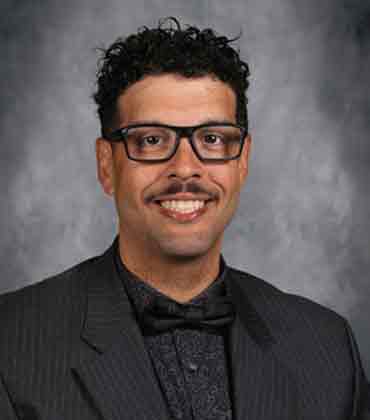
Brandon Robinson specializes in educational leadership, student opportunities and community building. As Superintendent at Jefferson-Morgan School District, he focuses on empowering educators and developing future leaders through servant leadership, strong relationships, data-informed decisions and continuous improvement.
From Coaching to School Leadership
Brandon Robinson’s journey toward school leadership began as a sports coach.
Years ago, he started out coaching football and basketball before teaching at Jefferson Morgan Elementary School for four years. He then joined Trinity Area School District as an autistic support teacher before returning to Jefferson Morgan as assistant principal, later serving as high school principal and assistant superintendent before becoming superintendent four and a half years ago.
Each role shaped Robinson’s leadership. Teaching influenced how he considers what educators need, while coaching taught him relationships, expectations, teamwork and developing people. Those experiences keep him connected to classrooms, staff and students while shaping his view of leadership as service.
Expanding Opportunities in Rural Schools
Robinson’s greatest pride lies in expanding opportunities within a small rural district. A culture that encourages new ideas is supported by the school board and embraced by principals and teachers. It has enabled a cyber academy, a revised reading curriculum and personalized learning time. It has also led to a career and technology center and the JRTC program.
His focus is on the culture behind these initiatives. The goal is to expand opportunities without letting district size become a limitation. His idea is that a small district may not replicate everything offered in larger systems, but its students should not have fewer opportunities.
Responding to Rural School Challenges
For Robinson, rural school challenges come down to people. Staffing shortages, enrollment dips and difficulty filling specialized roles in special education, science and mathematics can strain limited financial and human resources. He responds by looking creatively at what the district has and how it can be used.
Access is another priority. Robinson wants rural students to have the same opportunities as students anywhere else. The district responds through partnerships, collaboration and technology. He also focuses on growing local talent for cafeteria, custodial and teaching positions.
Robinson refuses to let limited resources translate into limited possibilities for students. He instead finds opportunities with available resources.
Preparing Education for Changing Needs
After 13 years in administration, Robinson has seen student needs change significantly. That experience has made flexibility central to his approach. For Robinson, flexibility means creating pathways for college, vocational education, work-based learning and cyber learning.
However, personalization should not come at the expense of relationships. Robinson sees educators remaining present for students as essential, keeping education personal even as learning becomes more tailored.
Rethinking Habits in School Leadership
One habit concerns Robinson most: keeping a practice simply because it has always been done that way. He values school traditions but asks whether they still serve students or remain in place because they are comfortable for adults.
He also does not see every new idea as an answer. Instead, he looks for purposeful change and considers what students need now. He wants systems built around current student needs that can adapt to the future.
Leading Through Service and Community
Strong leadership begins with remembering why the journey started. Robinson encourages emerging leaders to return to their roots and listen to teachers, staff, students and families. Having worked in the same community since 2009, he understands its people and what works for them.
For Robinson, leadership is service, not a title. It means helping others and surrounding oneself with capable people. If he left, the organization should continue to succeed because its people can find answers and carry the work forward.
That principle also shapes what Robinson stands for in rural education. With support from his school board and community, he continues to pursue new ideas while holding to the belief that a student’s opportunities should never depend on zip code or school size. He sees rural schools as capable of providing the same opportunities as any other school.

Get the best of Education Insider delivered directly to you.
