

Community Academy of Philadelphia (CAP) is built on a clear principle: students learn best when they can connect emerging knowledge to real-world experiences.
If students visit Verona, Italy, Shakespeare feels familiar. Whether they visit the local medical university's cadaver lab or conduct an interview with a NASA official, they carry that learning into their STEM classes. These experiences help them connect abstract concepts to something real, strengthening both understanding and retention. Without that foundation, classroom concepts can remain distant, making it harder to form connections, retain information, and apply learning with confidence.
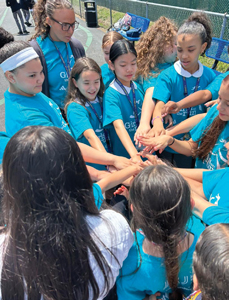 A strong advocate of experiential learning, CAP works to create meaningful experiences as part of everyday education. Across its K–12 program, its students—many of whom otherwise have limited exposure to outside experiences—engage in a wide range of opportunities, from extracurricular programs to overseas trips that expose them to different cultures, history and ideas.
“Experiential learning provides the essential first step that allows knowledge to connect, expand and ultimately transform into new ideas,” says Dr. Alberta O’Brien, CEO.
A veteran educator, O’Brien has spent more than three decades in the education industry shaping innovative programs, strengthening academic success, and promoting student well-being.
The Power of Hooks
How do experiential 'hooks' help students translate unfamiliar concepts into meaningful learning experiences?
Prior to becoming the CEO, O’Brien served as principal of the full K–12 program. She focused on helping new teachers understand the school’s philosophy and “CAP way” of educating students.
This philosophy is rooted in a concept CAP refers to as “hooks.” When students encounter the world beyond their everyday realities, classroom learning takes hold in meaningful ways.
Experiential learning provides the essential first step that allows knowledge to connect, expand and ultimately transform into new ideas.
 It was recognized that some students who may not connect with athletics or traditional arts can alternatively experience community and cognitive growth through gaming. Students who play complex strategy games often develop surprising fluency in chemistry, engineering concepts and mineralogy. They bring references from their virtual worlds into classroom discussions, building those critical cognitive bridges.
To help students follow their interests and passions, CAP offers career-focused options. The culinary and restaurant management class, for instance, blends hands-on instruction with structured academic learning. Students spend part of their time gaining practical experience in a working kitchen, and the rest engaging in online coursework that covers the foundational knowledge required in the hospitality industry. At the end of the class, they have the opportunity to earn ServSafe certification, allowing them to graduate with a recognized credential on their résumé. This gives them an advantage when seeking employment in restaurants, hotels or related industries.
Similarly, students interested in sports can pursue options in sports marketing, sports medicine, athletics and esports, exploring fields that range from performance and health to the business and media side.
Support That Meets Students Where They Are
Why is a whole-child approach critical for addressing diverse academic and emotional student needs?
The school’s greatest strength is its whole- child approach. Each student arrives with unique academic and emotional needs, and CAP meets students where they are.
-
Safety is the first step. From safety comes belonging, and from belonging comes the ability to thrive as part of a strong, supportive community.
To deliver holistic support, the school implements two multi-tiered support systems. One is focused on academics and the other on emotional and social well-being. Each system is led by coordinators who oversee varying levels of intervention.
To ensure an individualized approach, a large and dedicated pool of support staff is maintained, including social workers, academic specialists, and clinical counselors, who know each student well. They understand students’ strengths and areas needing improvement.
Every student is assessed to determine the types of support required, such as language assistance, mental health services, or academic intervention. Students are placed into appropriate tiers, and benchmarking occurs throughout the year to monitor progress.
The foundation of CAP’s approach is rooted in Abraham Maslow’s hierarchy of needs, where students’ most basic needs are met before catering to higher levels of growth.
As an inner-city charter school, CAP serves communities where many families face economic challenges. Students often come from lower socioeconomic backgrounds, limiting exposure to travel, museums, green spaces and diverse career paths outside of school.
Breakfast and lunch are provided. Medical and basic care needs are addressed to ensure students are not distracted by unmet needs.
Safety First
In what way does safety contribute to student belonging and overall academic engagement outcomes?
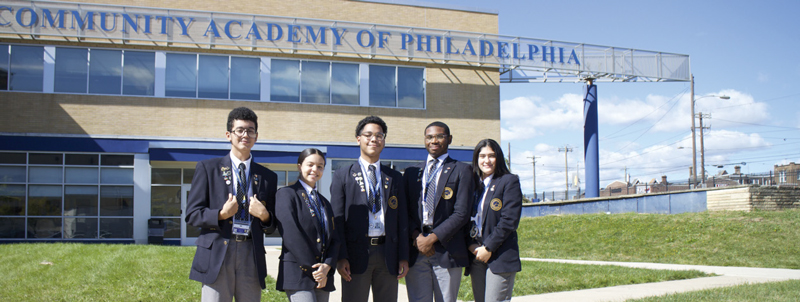
 Safety is non-negotiable on CAP’s campus. The school has security officers, cameras, metal detectors, clear bag policies and uniforms to maintain a secure environment. Emotional safety is prioritized through anti-bullying initiatives and programs that focus on social-emotional development.
When incidents occur in the neighborhood, students often return to the school rather than seeking help elsewhere, demonstrating the trust they place in the institution.
“Safety is the first step. From safety comes belonging, and from belonging comes the ability to thrive as part of a strong, supportive community,” says O’Brien.
Teachers Who Stay
CAP has a strong teacher retention rate because educators feel supported rather than pressured. In a city where standardized test scores often dominate headlines, CAP focuses on growth alongside proficiency. Teachers can see students make multiple years of progress in a single year, reinforcing the impact of their work and encouraging them to stay.
The administration shields teachers from external stressors, absorbing complaints and policy pressures, allowing them to focus on students. CAP also provides teachers with innovative materials, hands-on tools and unconventional resources, trusting their creativity and professionalism.
Fueling Academic Opportunities and Family Engagement
As a charter school, CAP receives less per-pupil funding than traditional district schools.
Title I funds allow CAP to employ reading and math specialists and teaching assistants. It also supports online academic platforms, tutoring services, and professional development opportunities that allow teachers to implement innovative strategies for lagging students. Programs like the Ready to Learn Block Grant strengthen literacy and math instruction, and Title III plays an important role in supporting ESL students, ensuring language barriers do not prevent access to academic success.
CAP also prioritizes family engagement events like STEM night and literacy night are hosted, where families participate in hands-on activities with their children, giving them practical tools to support learning at home. Many of CAP’s students are first-generation college applicants. CAP offers financial aid workshops, including FAFSA assistance events, guiding families through the complex college application process.
Building a Real Park
 As CAP approaches its 50th anniversary, it has launched a capital campaign that reflects its educational philosophy and community needs.
The vision is expansive; modernized STEM labs, experiential education initiatives and green open spaces. The vision is deeply personal. A moment that stayed with O’Brien, is when a first grade student referred to the school’s playground equipment on their parking lot as “the park.” That interaction sparked a mission to create something more. CAP is now working to transform surrounding spaces into a green space, giving students the chance to experience nature in a meaningful way.
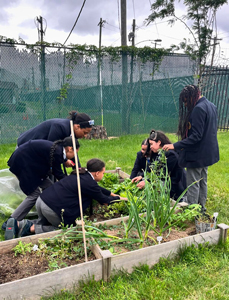
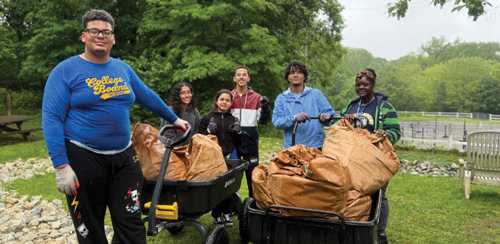
In dense sections of Philadelphia, green space is often limited. Now, CAP is purchasing adjacent properties to create outdoor learning environments where students can truly experience nature. The effort connects to environmental STEM programming, landscape architecture exploration and urban sustainability careers.
At its heart, the campaign is about a student knowing what a park truly feels like. Green space nurtures imagination reduces stress and fosters connection. It creates yet another hook for learning.
The expansion goes beyond aesthetics. CAP is integrating environmental themes into its STEM curriculum, enhancing science labs, and developing programming connected to real-world career pathways. It is also exploring opportunities for students to learn about landscape architecture and urban environmental design.
Igniting possibilities with experiential learning, CAP builds futures.

