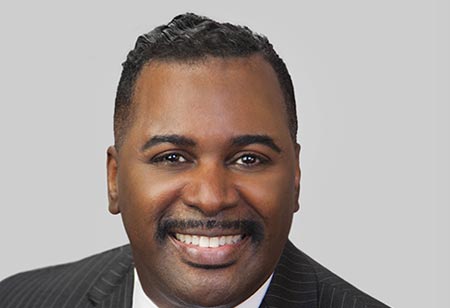
 Dr. Pamela Yancy-Taylor, President and CEO and Dr. Thomas Maridada, Founder and Creator of the Center
The Center for Strategic Leadership and Organizational Coherence (CSL) looks deeper, viewing the issue as an expertise gap. It helps K-12 districts understand what is limiting student progress and equips educators with the instructional capacity, coaching and professional learning needed to move students toward mastery.
“We help districts identify what is standing between students and mastery,” says Dr. Thomas Maridada, Founder and Creator of the Center.
This approach grew from Dr. Maridada’s experience in school and district transformation. A nationally recognized turnaround leader, his career spans teaching, school leadership, superintendency and educational policy. In those roles, he saw that lasting improvement depends less on introducing another program and more on the development of teachers and leaders closest to students. As he supported districts facing persistent achievement challenges, other leaders began asking whether those results could be repeated, scaled and sustained in their own communities. CSL took shape around that need.
Today, the founding vision of strengthening student outcomes by building educator and leadership expertise continues under Dr. Pamela Yancy-Taylor, president and CEO. An accomplished educator and leadership development expert, she carries it forward through initiatives that deepen educator expertise, expand leadership capacity and strengthen instructional systems. Working alongside school districts, state education agencies, institutions of higher education and community organizations across the U.S., she helps education leaders build performance-driven systems that sustain student achievement.
At the center of this work is the belief shared by Dr. Maridada and Dr. Yancy-Taylor: every student deserves access to highly effective teachers and school leaders.
“Students don’t miss the mark on purpose. Teachers don’t miss the mark on purpose. Leaders don’t miss the mark on purpose,” says Dr. Yancy-Taylor. “They miss the mark because there is an expertise gap.”
From Broad Concern to Precise Instructional Action
CSL begins by looking beyond student performance data to understand the instructional realities behind the numbers. It reviews assessment results, classroom evidence, item analysis and educator feedback to see where students are struggling, why instruction may not be impacting student learning and what needs adjusting.
 This level of analysis can change how a district understands the problem. In one district, students undergoing standardized testing were repeatedly answering the same types of questions incorrectly. The initial assumption was that students were not taking the test seriously. A closer review revealed that they were being asked to demonstrate knowledge in a format they had not been taught to use.
The issue was not student effort but instructional design. Teachers needed support in presenting material in different ways to help students practice the thinking required by the assessment and align classroom instruction more closely with the skills being measured. After teachers received support in differentiated strategies and used generative AI to provide more individualized instruction, student proficiency rose from 24 to 98 percent.
The case demonstrates how CSL’s work moves beyond conventional professional development to be more effective. Teacher preparation may introduce instructional principles, but real classrooms require constant adjustment. CSL helps educators build that adaptive capacity through feedback loops, exit tickets, formative assessments and reflection routines. Teachers learn to see what students understood, what they missed and what needs to change.
“Students arrive with different literacy levels, learning gaps, attention patterns and life experiences. A single lesson delivered one way cannot produce mastery for every learner,” says Dr. Maridada.
Developing Educators Who Drive Student Outcomes
CSL views people as the primary driver of academic progress, directly connecting human capital management to instructional improvement. Strong teaching is not sustained through professional learning alone. It also depends on how districts recruit, onboard, coach, support, retain and develop educators over time.
Teachers who feel supported in their schools make a lasting difference in student outcomes.
CSL’s Teacher Network for Improvement is an initiative that brings together high-performing teachers and prepares them to influence instruction beyond their own classrooms. As part of ongoing professional learning, these educators study high-leverage instructional strategies, analyze student performance data and return to their schools equipped to support colleagues.
“Teachers who feel supported in their schools make a lasting difference in student outcomes,” says Dr. Yancy-Taylor.
That strengthens more than classroom practice. It also affects retention, leadership culture and ownership across the system. Teachers who are prepared, respected and supported are more likely to stay, while leaders who know how to identify and develop strong educators are better positioned to build a pipeline of future mentors, administrators and district leaders.
Creating Coherence Across the System
CSL also recognizes that educator capacity alone is not enough. Even strong teachers and leaders can struggle when district priorities, school-level decisions and classroom practice are not aligned.
Central to CSL’s approach is organizational coherence, which links leadership, instructional practice, strategic priorities and implementation so schools move in a common direction.
CSL puts this into practice through structured advisory teams that include teachers, principals, instructional coaches, central office leaders and superintendents. These teams review student evidence, examine classroom practice and connect district priorities with daily instructional realities.
 This approach addresses a common weakness in K-12 improvement work—fragmentation. District leaders may define success one way, principals another and teachers another. CSL replaces that disconnect with shared evidence and expectations.
“When stakeholders discuss instructional barriers together and agree on what strong teaching requires, improvement becomes more consistent,” says Dr. Maridada.
The model also supports CSL’s multi-district work. Educators and leaders from different regions can exchange promising practices and adapt them to local realities. While many issues are echoed across districts, a rural district may face different resource constraints than an urban one. CSL helps them learn from one another without turning improvement into a one-size-fits-all model.
Building Capacity That Outlasts Leadership Changes
CSL does not aim to remain a permanent external presence in a district. Its goal is to help them develop the internal talent needed to sustain progress when leadership changes.
That work starts with leadership planning inside the system. Principals are encouraged to recognize leadership potential in their buildings, while central office teams prepare future district leaders before vacancies create disruption.
Peer review brings that capacity into daily practice. Instead of relying only on periodic administrator observations, accomplished teachers contribute through regular feedback, modeling and coaching. The result is a stronger accountability culture, one in which improvement is shared across the professional community rather than imposed from above.
Growing Educators from Within Communities
Beyond strengthening the educators already inside a district, CSL also helps districts create new routes into the profession. Its recognition as a U.S. Department of Labor provider of registered apprenticeships in education expands that work through structured pathways for aspiring teachers and school leaders.
-
We help districts identify what is standing between students and mastery.
This is especially valuable for rural and high-need districts that struggle to attract educators from outside regions. Teacher assistants, support personnel and aspiring educators often already have strong ties to the students and families they serve. Apprenticeship gives them a pathway into the profession through coaching, residency, guided practice and professional learning.
Connecting preparation with practice, CSL helps districts build a more reliable pipeline of teachers and leaders who understand the community, remain invested in it and are trained to meet its academic needs.
Preparing Districts for the Next Era of Instructional Leadership
As CSL looks to the next stage of K-12 education, literacy remains a central priority. The organization sees reading and writing proficiency as the foundation for learning across every subject, not just a responsibility of elementary teachers or English language arts departments.
That distinction matters because students continue to rely on literacy skills in science, social studies, mathematics, the arts and career pathways. CSL helps districts prepare instructional leaders and teachers to recognize where students need support, apply structured reading and writing strategies, and make literacy development part of everyday instruction.
Technology also plays a role in that future. CSL views generative AI as a tool that can help educators provide more individualized support when used with a clear instructional purpose. At the same time, CSL’s work extends well beyond technology. Its approach combines instructional coaching, differentiated instructional strategies, leadership development, implementation support, peer review and continuous improvement to help educators respond to learning gaps with precision. With teachers at the center, AI can help strengthen differentiation and targeted practice and support faster responses to learning gaps.
This practical, student-centered approach underpins CSL’s recognition as a Top Educational Services Provider 2026. Developing leadership capacity, aligning systems and strengthening sustainable improvement practices from within, the Center for Strategic Leadership and Organizational Coherence helps districts continue advancing student success long after an engagement concludes.