


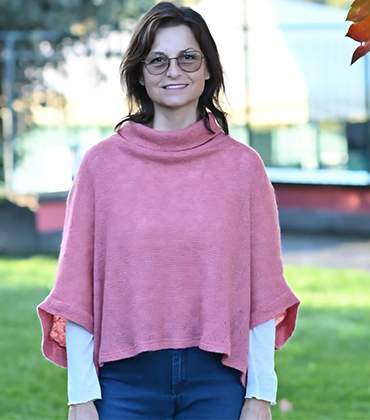
 Natasha Palladino, Head of School
Long before international education became widespread in Italy, Castelli introduced a hands-on, inquiry-driven model that integrated the Italian curriculum with English-language learning. Built around the philosophy “When I do, I understand,” the school encourages students to learn through discussion, experimentation, collaboration and real-world experiences rather than passive memorisation.
That model continues to shape the school today. Since becoming a Cambridge International School in 2013, Castelli has combined strong Italian foundations in subjects such as maths, science and history with internationally recognised English qualifications. Although the Cambridge IGCSE English as a Second Language exam is typically completed at age 16, Castelli students take it at 13, with 100 per cent achieving a C grade or higher and the majority earning A or B grades. Graduates move confidently into Italian, British, American and international secondary schools, while alumni have gone on to careers in engineering, aviation, law, finance and start-ups.
“We want students to become positive and active contributors to our society and to our world,” says Natasha Palladino, Head of School.
Learning That Comes Alive
At Castelli International School, learning extends far beyond textbooks by connecting subjects through real-world context and critical discussion. While studying the Russian Revolution, students read Animal Farm by George Orwell and discuss its relevance to both history and modern society. In primary school, themed learning weeks encourage every class to investigate topics together. During a recent Wonders of the World project, students became teachers themselves, presenting discoveries to peers across the school.
It also places growing emphasis on critical thinking, helping students evaluate information independently in an era shaped by AI and misinformation. Middle school students also joined a European Space Agency Climate Detectives project, analysing water management and consumption, studying satellite imagery and developing strategies to reduce water waste.
History, nature and daily life come together through hands-on experiences at Castelli. Students studying the Etruscans create Etruscan pottery, visit a nearby village and stay overnight in reconstructed Etruscan huts. On campus, vineyards and olive groves become living classrooms where children harvest grapes and press olives into oil.
-
We want students to become positive and active contributors to our society and to our world.
The school’s greenhouse, vegetable gardens and Earth to Table programme also play a central role in daily learning. In one recent lesson, students harvested spinach they had grown themselves before preparing a stir-fry during food studies. Students also work on sustainability projects such as building plastic-free lamps from biodegradable mycelium, while the school’s long-running food initiatives include meat-free lunches designed to reduce environmental impact.
A Community Built on Confidence and Care
Castelli’s approach also places equal importance on emotional wellbeing. Mindfulness practices help students manage stress and anxiety. One student who joined the school feeling shy and insecure later addressed hundreds of peers at the National High School Model United Nations conference in New York, which hosted more than 5,000 students worldwide.
Longstanding teachers strengthen this sense of belonging. Many remain at the school for years, creating a strong relationship where students feel genuinely known and supported. Families often comment on the positive energy and close-knit atmosphere they experience while visiting the school.
As AI reshapes education and the way students consume information, Castelli continues to balance academic rigour, hands-on discovery, international learning and emotional wellbeing. The integration of the Italian ministerial curriculum, English-language instruction and Cambridge pathways prepares students to move confidently across Italian, British, American and international education systems, while sustainability projects, mindfulness practices and experiential learning help students grow into resilient individuals. Castelli continues to demonstrate how meaningful, student-centred education can combine critical thinking, global readiness and practical learning for the next generation.

