


 Today, enterprise-wide digital transformation has become a necessity rather than a novelty in higher education. While the corporate world has surged ahead, higher education remains weighed down by legacy systems and institutional inertia, hindering innovation and meaningful change. As technologies like AI reshape every industry, many schools are uncertain about where to begin or how to keep pace with this sweeping change.
Beyond Academics (Beyond) was built to address this unpreparedness. As a management consulting firm dedicated exclusively to higher education, the company brings an entrepreneurially infused, disruptive approach to help schools break free from outdated models and rapidly transition into future-ready, student-centric operations.
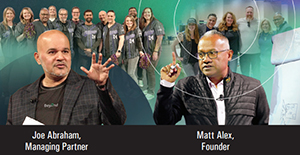
“By driving any transformation through our process of visioning, alignment, entrepreneurial ideation, and rapid execution, our focus is to shift institutions from slow and reactive to personalized and proactive,” says Matt Alex, the founder.
The firm currently serves the U.S. higher education market, working with a wide range of institutions—from R1 research universities and large community colleges to mega-schools and small privates.
Their work focuses on helping leadership teams design and deploy strategies to deliver experiences that are personalized, seamless, and responsive. Beyond’s experts facilitate institution-wide transformation by helping institutions define a new vision, align stakeholders, and deploy technology that truly serves the modern learner.
-
By driving any transformation through our process of visioning, alignment, entrepreneurial ideation, and rapid execution, our focus is to shift institutions from slow and reactive, to personalized and proactive
The process begins with a whiteboard session—a low-to-no-cost visioning exercise that allows senior executives to ideate around a challenge or opportunity, whether cultural, technological, or operational. From there, Beyond moves directly into building and executing a roadmap to solve the problem, particularly if the institution already has a strong grasp of its current state. In the absence of that clarity, an assessment is conducted to map the current landscape before building a strategy for becoming future-ready.
Through design thinking and Beyond’s proprietary P3S2 framework—which examines People, Process, Policy, System, and Structure friction points—the company builds optimized strategies that align with the appropriate people, process, and technology changes needed to achieve leadership outcomes. The insights gained from the P3S2 assessment are used to craft a customized blueprint for transformation, guiding actions over a 6–36-month period.
A notable case study highlights the company’s outcome-driven approach. Recently, Beyond was engaged by Johns Hopkins University, which sought help in preparing for an ERP/SIS transformation. The engagement began with a visioning session involving registrars and university leaders, followed by an assessment to identify friction points that stood in the way of success. Using its P3S2 framework, Beyond mapped the staff and student journey, identified key obstacles, and uncovered opportunities for both immediate and long-term optimization.
This led to a multi-year process of preparatory work—realigning processes and modernizing systems. This “pre-work” is projected to save the institution nearly $30 million in implementation and consulting fees during the rollout of its new student system.
A major focus for Beyond is minimizing Client Time on Project (CTOP) while delivering high-impact results. The company has embraced widespread use of AI to support this goal and even helps clients implement similar systems to compress workflows and drive efficiency.
Fueled by an in-house creative agency, a full-stack development team, and an AI accelerator, the company ensures that every project it undertakes is both successful and sustainable. According to current and recent clients, unlike traditional firms that stop at advice or treat technology as a silver bullet, Beyond leads with outcomes—and pursues them with the optimal blend of strategy, professional development, process modernization, and technology, staying involved and accountable every step of the way.

