
The healthcare industry experiences a significant change because people now prefer complete treatment methods. Patients and healthcare providers are using integrative medicine to find solutions for their health problems because they want to treat medical conditions instead of just stopping symptoms. Integrative medicine uses traditional medical methods together with alternative treatments to create treatment plans that help patients achieve complete health.
Top Integrative Medicine Universities 2026
Integrative medicine universities provide higher education focused on whole-person healthcare and evidence-informed therapeutic approaches. With a focus on clinical training, wellness science, patient-centered care and professional readiness, they support stronger practitioner preparation and more holistic healthcare delivery.
Solutions

National University of Health Sciences
Where Integrative Healthcare Education Meets Real-World Practice
Joseph Stiefel, MS, EdD, DC, President
The National University of Health Sciences (NUHS) is shaping the future and setting the standard of excellence in healthcare education by preparing physicians and healthcare practitioners for collaborative, evidence-driven care rooted in prevention and patient-centered outcomes. Its graduate programs in chiropractic medicine, naturopathic medicine, and acupuncture share a collaborative academic setting, giving students early exposure to integrated care pathways and the clinical judgement required to operate within them.
State of Industry
Leadership Perspective
University of Miami Miller School of Medicine
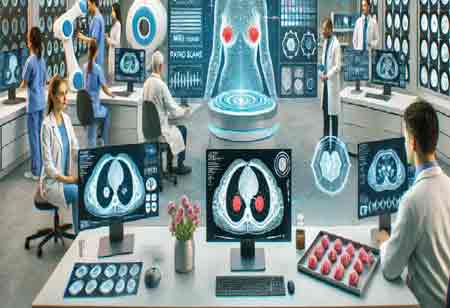
Artificial Intelligence in Radiology and Breast Imaging
Fernando Collado-Mesa, MD, Associate Vice Chair, AI Research and Ethical Use, Department of Radiology
AI in Radiology
The background of artificial intelligence (AI) in diagnostic radiology can be traced back to several key milestones, which have contributed to the development and integration of AI technologies in the field. A brief overview of these milestones includes:
Integrative Medicine Universities Info
Q1
What Do Top Integrative Medicine Universities Offer Students?
Top Integrative Medicine Universities prepare future healthcare professionals through programs that combine evidence-based medicine with complementary and integrative healthcare approaches. Many offer graduate and professional degrees in disciplines such as chiropractic medicine, naturopathic medicine, acupuncture and related health sciences while emphasizing interdisciplinary collaboration and patient-centered care. Students choose Top Integrative Medicine Universities for education that reflects the growing importance of whole-person healthcare and collaborative clinical practice.
Q2
What Academic Programs and Clinical Training Are Common in Top Integrative Medicine Universities?
Many Top Integrative Medicine Universities provide classroom instruction alongside laboratory work, clinical education, supervised patient care and research opportunities. Programs often emphasize anatomy, diagnosis, clinical reasoning and evidence-informed practice while encouraging collaboration across multiple healthcare disciplines. This combination helps students develop practical skills and prepares them for diverse healthcare environments.
Q3
Why Is Demand for Top Integrative Medicine Universities Continuing to Grow?
Interest in Top Integrative Medicine Universities continues to increase as healthcare systems place greater emphasis on preventive care, interdisciplinary collaboration and patient-centered treatment. Students are attracted by career opportunities in a healthcare landscape that increasingly values professionals who can work across disciplines while addressing physical, lifestyle and wellness needs. Growing awareness of integrative care models has also expanded educational opportunities within this field.
Q4
How Are Top Integrative Medicine Universities Evaluated?
When comparing Top Integrative Medicine Universities, prospective students often consider academic quality, accreditation, faculty expertise, clinical training opportunities, research involvement, student support services and graduate outcomes. They may also evaluate curriculum design, access to hands-on learning and opportunities for interdisciplinary education. These factors help students identify programs that align with their professional goals and preferred learning environment.
Q5
What Value Do Top Integrative Medicine Universities Provide Beyond Classroom Education?
Beyond academic instruction, Top Integrative Medicine Universities help prepare graduates for collaborative healthcare environments by emphasizing communication, clinical judgment and ethical patient care. Many help with research, community engagement and lifelong learning, enabling graduates to adapt to changing healthcare needs while contributing to improved patient outcomes. This broader educational approach supports both professional development and high-quality healthcare delivery.
Q6
How Are Innovation and Teaching Excellence Shaping Top Integrative Medicine Universities?
Innovation within Top Integrative Medicine Universities includes expanded clinical simulation, interdisciplinary education, evidence-informed curricula and technology-enhanced learning. Many institutions continue refining educational models to reflect advances in healthcare research while strengthening collaboration among different health professions. This balance between scientific rigor and integrative care helps prepare graduates for the evolving demands of modern healthcare

Get the best of Education Insider delivered directly to you.
