
Faith-based education is undergoing a meaningful shift as families seek learning environments that align academic growth with spiritual formation. Christ-centered hybrid schools are emerging as a response to this need. These models blend classroom instruction with home-based learning and place Christ at the center of every subject and interaction. The result is a flexible yet deeply rooted approach that is reshaping how students experience education and faith together.
Top Christ-Centered Hybrid Schools 2026
Christ-centered hybrid schools combine faith-based instruction, structured academics, home learning and campus-based classroom experiences for students. With a focus on spiritual formation, academic development, family involvement and flexible scheduling, they support personalized education and values-aligned learning environments.
Solutions
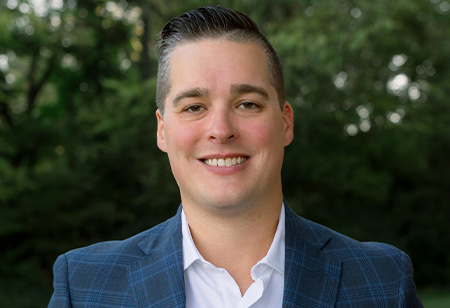
Safe Harbor Hybrid
Where Faith, Learning, and Character are Raised Together
Mike O'Nan, President
When a group of ten educators and parents gathered to build a school, they began with a conviction to bring each decision before God first. That approach became the foundation of Safe Harbor Hybrid, a Christ-centered hybrid school serving Pre-K through 12th grade. From the outset, the school has been built on three pillars: spiritual formation, academic excellence, and character development, pursued as a unified effort.
State of Industry
Leadership Perspective

Westminster Schools of Augusta
Building College Readiness in a Changing Admissions Landscape
Mark Hampton, Director of College Counseling
Mark Hampton is an experienced college counseling leader with a career shaped through years of work across higher education, ministry and student development. As Director of College Counseling at Westminster Schools of Augusta, he brings deep insight into admissions environments and student pathways. His background includes nationally recognized institutions such as Duke University and the University of North Carolina. Today, he channels that experience into guiding high school students with clarity, strategy and genuine mentorship.
Christ-Centered Hybrid Schools News
Enrollment Growth Pushes New Attention Toward Christ-Centered Hybrid School Models
Monday, August 17, 2026
As more families seek alternative approaches to public schools, they are showing growing interest in Christ-centered hybrid school models. The term "hybrid" refers to the combination of classroom education and homeschooling that allows families to participate in their children's education without fully assuming its responsibility.
Flexibility is a key element of this approach. In conventional models, students attend classes every day on campus. Hybrid schools divide education between campus attendance and home learning. As a result, the parent's role changes dramatically because now he or she becomes an active participant in this process rather than only a viewer of a child's results.
From a business perspective, it means that when families consider joining schools offering Christ-centered hybrid education, they evaluate the extent of participation rather than the program's content, schedule or opportunities provided. This aspect should be discussed during the enrollment phase.
In Christ-centered schools, faith-based education goes hand in hand with academics. Therefore, the interest of parents in hybrid education may be explained by their desire to maintain family values even when their kids study at school.
When discussing the implementation of hybrid education in existing schools, several important issues come to mind. First, such education involves closer interaction between teachers and parents. It means that assignment planning, communications between the parties, and progress tracking should become essential elements of operation. Schools that increase enrollment while lacking such structures risk facing difficulties later.
Secondly, teachers' tasks may change as well. Along with teaching kids, instructors in hybrid schools have to teach parents how to implement certain lessons. Thus, the teacher-parent relationship becomes somewhat more collaborative. Such a change could be beneficial, but it still requires appropriate training and a clear set of standards.
Finally, hybrid education raises specific questions regarding school facility needs. In contrast to traditional schools, in which classrooms operate on a fixed schedule, hybrid schools may have a different schedule. Therefore, space requirements may differ as well.
Overall, the current trend of increased interest in hybrid models among parents of Christ-centered schools can be considered a response to growing doubts about conventional education. In other words, families seem to look for a new format of collaboration between parents and schools in the context of faith-based education.
At the same time, whether the growth is sustained or not will depend not only on philosophical questions, but also on practical aspects. For example, parents need to evaluate the compatibility of the hybrid academic structure with their personal schedule. In turn, schools need to ensure the quality of education across different settings.
Parent Workloads Become a Defining Factor in Christ-Centered Hybrid School Adoption
Monday, August 17, 2026
When discussing interest in Christ-centered hybrid schools, it should be mentioned that the main consideration of those interested is the educational philosophy. However, one of the key decision-making criteria that should not be overlooked is the ability of the parents to commit to the home learning component.
Indeed, unlike traditional institutions, hybrid schools involve additional parental participation since children spend some parts of the week attending classes on the campus and do the rest of their learning at home. This makes them attractive to some people; however, it imposes additional demands on parents' time that should not be ignored by the representatives of such institutions.
While for some parents, it is good that there is increased transparency in terms of lesson content and the learning process of the child, others might find the workload related to this process greater than they could have expected at the stage of enrolling in the institution.
In this regard, hybrid schools' representatives should carefully consider what kind of message they convey to prospective clients and whether this is enough to convince people of their merits. Indeed, it seems that the discussion on workload involved will become increasingly necessary.
This is also associated with the age of the students. While for younger children, it might be necessary to supervise them when they learn from home, older ones will be able to complete tasks on their own to a certain extent. At the same time, some oversight of the work performed is still needed. Therefore, it is crucial for schools to explain this to parents and to clarify what kind of contribution parents are expected to provide, depending on the age of the children.
Various programs aimed at helping parents in this regard might contribute to positive enrollment experiences. On the other hand, lack of an appropriate orientation program and insufficient assistance from teachers might lead to disillusionment among the previously excited parents who now realize that homeschooling is harder than expected.
Moreover, the issue of workload involved should also be discussed from the point of view of accessibility. Indeed, while some parents may have a flexible working schedule and sufficient free time for engaging in their children's home learning, others might experience difficulties with finding time for doing so due to working hours.
This makes it important to discuss the issue in further depth to understand whether hybrid schools will be accessible to everyone or if there will be limits imposed in terms of parental flexibility and available free time.
Overall, when enrolling in hybrid schools, parents evaluate the potential workload that they would be experiencing in this regard.
Operational Challenges That Come with Scaling Christ-Centered Hybrid Schools
Monday, August 17, 2026
Christ-centered hybrid schools come with unique management challenges compared to traditional institutions. As the popularity of the education system expands, there are many questions concerning the issues of consistency, administration and teaching coordination that increase in complexity along with the rise in the number of enrolled students.
Consistency in learning remains a core issue in hybrid schools. There is no fixed environment for instruction. Students learn both in classrooms and at home. This creates a need to maintain coherence of the process despite the differences in the environment.
Lesson planning becomes an essential operation for hybrid schools' educators. They are tasked to develop curricula that flow seamlessly from classroom lessons to home ones. While certain methods work perfectly fine in a classroom, they might become less effective when students study independently.
It is crucial to find new solutions for monitoring student progress when using the hybrid program. Observations in a classroom provide instant feedback, whereas hybrid courses imply more focus on communication, assessment of assigned tasks and regular report analysis to understand performance.
The administration of hybrid schools needs to expand its capacity, together with growing enrollment levels. There are many communication streams established by multiple students and families taking part in hybrid courses. The management might experience difficulties keeping track of activities with an increased number of people involved.
Recruiting and training become additional concerns of hybrid schools' administration. Besides the task of finding skilled instructors, one should keep in mind the necessity to develop strong working relationships with parents because of their participation in the education process.
Technology is another operational aspect related to hybrid models of education. Online learning requires certain platforms to be set up where instructions, materials and completed assignments can be uploaded. Their performance might significantly contribute to the effectiveness of hybrid programs.
Religious aspects of learning introduce yet another coordination requirement. For schools aiming to ensure continuity of Christ-centered education beyond the boundaries of campus, there is an important issue of maintaining a unified approach both in classrooms and at home. Such collaboration implies agreement on faith-related matters between teachers and students' parents.
While discussing hybrid schools that incorporate religious education into their curriculum, it would be natural to emphasize their importance in shaping children's minds. However, there is another side to things: the need to organize and coordinate activities related to hybrid education.
Christ-Centered Hybrid Schools Info
Q1
What Defines Christ-Centered Hybrid Schools for Families?
Christ-Centered Hybrid Schools are designed to bring together classroom learning, home education and faith formation in a way that feels connected throughout the week. The goal is not simply to split time between school and home, but to create an environment where academic learning, biblical teaching and character development consistently support one another. Safe Harbor Hybrid follows that model through a Pre-K through 12th grade program centered on spiritual growth, academic excellence and strong character formation. Its hybrid structure provides families with the support of a school community while still allowing parents to remain closely involved in their child’s daily education.
Q2
How Does Safe Harbor Hybrid Apply the Model in Daily Learning?
A hybrid model only works well when learning at home and learning on campus feel connected rather than separate. At Safe Harbor Hybrid, students attend classes on campus two days each week while parents guide instruction at home during the remaining days. Lessons are planned to flow naturally between both settings so students arrive prepared for classroom discussions, assignments and hands-on activities. Christ-Centered Hybrid Schools rely heavily on that consistency because unclear expectations or disconnected schedules can quickly create stress for families. The structure at Safe Harbor also reflects the founders’ own experience as educators and homeschooling parents who understood the importance of balancing flexibility with accountability.
Q3
Why Does Parent Partnership Matter in Hybrid Education?
Parents play a major role in the learning process which makes communication especially important in a hybrid environment. Monthly lesson plans, weekly teacher emails and parent education events help families stay informed, support academic progress and navigate reading or writing development more confidently at home. For older students beginning in ninth grade, a syllabus-based structure also encourages greater independence and personal responsibility. In Christ-Centered Hybrid Schools, this kind of partnership helps parents feel supported and connected instead of feeling like they are managing home instruction entirely on their own.
Q4
How Can Faith Formation Stay Connected Across Grade Levels?
Faith formation often becomes more meaningful when students across different age groups engage with the same biblical themes together. At Safe Harbor, chapel is held twice each month, students memorize scripture regularly and the K–5 Bible curriculum allows siblings to study the same passages at different levels of depth and understanding. Character awards also help connect biblical values with everyday behavior, relationships and decision-making. Christ-Centered Hybrid Schools use these shared experiences to make faith a visible part of school culture rather than limiting it to a scheduled Bible class during the week.
Q5
What Role Does Mentorship Play in Character Development?
Character development usually grows through example, responsibility and everyday interaction. The Lighthouse Leaders mentorship program pairs students in fifth through twelfth grade with younger peers for monthly small-group discussions focused on scripture, leadership and character themes. Students in fifth through seventh grade participate as co-mentors while older students take on larger leadership roles. In Christ-Centered Hybrid Schools, mentorship gives older students the opportunity to actively model responsibility and faith while younger students learn from peers they naturally look up to and relate with more easily.
Q6
What Should Families Consider When Comparing Faith-Based Hybrid Options?
Families comparing faith-based hybrid schools should pay close attention to how the school handles structure, communication, curriculum and spiritual expectations across both campus and home learning. Small class sizes, clear home-day guidance, service opportunities and college-preparatory pathways can all shape the student experience in important ways. Safe Harbor’s average class size of fourteen students reflects the level of personal attention many families value both academically and relationally. Planned dual enrollment pathways and a growing early-grade program also highlight the importance of choosing a school that can expand thoughtfully without losing its sense of community. Christ-Centered Hybrid Schools tend to work best when they provide enough structure to support learning and discipleship while still leaving room for personal attention, meaningful relationships and active parental involvement.

Get the best of Education Insider delivered directly to you.
