
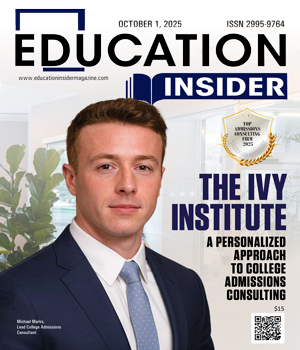
For students, college applications can feel like auditions for a future self. But the real opportunity lies in showing who they are at the moment; an individual grounded in authentic experiences and genuine ambitions. At The Ivy Institute, that’s the core mission. It operates on the belief that every student is more than just a collection of grades, test scores, and extracurricular activities. Instead, they are a unique individual, with personal stories, goals, and aspirations that deserve to be recognized, celebrated and most importantly, integrated into the college admissions process in a way that maximizes their potential. The institute helps students peel back the layers, find the truest version of themselves and shape it into a story that is unmistakably their own. In an industry filled with firms offering cookie-cutter services, The Ivy Institute is a refreshing anomaly, offering personalized guidance for students navigating the complex college admissions process. It believes that every student can earn a spot at any college with the right care, time, and support. The goal: 100% acceptance. Ambitious? Yes. But for The Ivy Institute, settling for anything less isn’t an option. The Genesis of The Ivy Institute: A Personal Mission The Ivy Institute was founded with the vision of creating a space where the college admission process could be more than just a transactional experience. Rather than adopting the fast-paced, assembly-line approach seen in larger consulting firms, The Ivy Institute emphasizes deep, one-on-one connections with students and families. The focus is on truly understanding each student and getting to know them on a personal level before counseling begins. To accomplish this, The Ivy Institute believes there should be no limits on a student’s future—so they place none on the time, support, or care each student receives. Every student gets everything they need—no matter how much time it takes. The idea behind this personalized approach is simple yet powerful; students should be treated like family by a team dedicated to helping them thrive in both the admissions process and personal growth. “We don’t just provide a service; we develop relationships,” says Michael Marks, the lead college admissions consultant at The Ivy Institute. Matching Students with the Right Counselor A defining feature is Ivy’s approach to matching students with the right admissions counselor. Through a series of questionnaires and "meet and greet" sessions, allowing the team to go beyond academic credentials to assess personality, interests, work style and future goals. The matched counselors also share the same academic or professional path as their students’ goals—creating an authentic connection as mentors who’ve walked the very same road to acceptance. In addition to a student’s primary admissions counselor, all students are also paired with a recent graduate from the student’s target school. This ensure all advice they receive is relevant and matches the language and culture of each college’s student body. By creating this carefully curated connection, it ensures all students excel in every aspect of the admissions process, from essays to interviews.
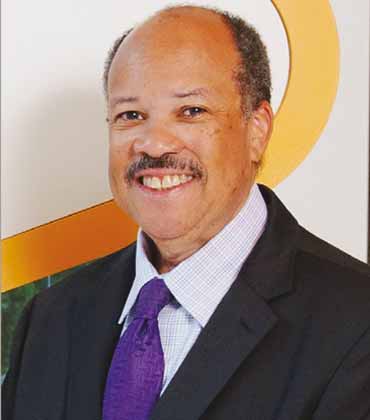
His physician father recognized that Rohan’s verbal and reading skills were not up to par, so he enrolled him in the ACS program to help him grow. Initially, his academic strengths were mathematics, logic, and reasoning, but he needed more than just traditional tutoring. What he found at ACS was a transformative experience that helped him unlock his full potential. “I was a student who needed both structure and intellectual challenge. ACS gave me that and so much more,” Rohan recalls. Tailoring Education to Every Student At the ACS Foundation, education is not a one-size-fits-all model. “We believe education should be personal, purposeful, and transformative,” says Mr. C. William Coakley, president of the ACS Foundation. “Every student deserves to be recognized as a whole person and engaged with intention.” The ACS philosophy is rooted in the idea that education goes beyond academic success. It focuses on the holistic development of students, intellectually, personally, and professionally. ACS creates individualized learning plans for each student, ensuring their strengths and weaknesses are nurtured. For Rohan, this meant working with Mr. Coakley to tailor his curriculum around reading, writing, and grammar while leveraging his math and logic strengths. Rohan’s time at ACS equipped him with the skills to score a 35 on the ACT, with individual scores of 35 in both reading and English proving that when students are given the right tools, they can achieve extraordinary results. Long-Term Mentorship and College Prep: More than Just Test Scores ACS is not just about preparing students for exams; it’s about preparing them for life. When students join the program, they are mentored and guided through every step of their academic journey. This includes one-on-one support in college research—helping them understand which schools would best align with their values, goals, and interests. Rather than focusing solely on Ivy League schools, ACS emphasizes finding the best fit for each student. This philosophy extends to the writing process as well. “We don’t just help students write essays; we help them tell their stories,” explains Rohan. ACS’s writing program is unique in that it focuses on personal identity—helping students craft essays that reflect who they are, what they stand for, and how they will contribute to the college community. During his college application process, Rohan worked through several drafts of his personal essays, with Mr. Coakley guiding him through every step—sometimes revising upwards of 30 drafts to ensure they were perfect. This process was transformative for Rohan, and he uses these skills today in his academic and professional life, from internship applications to research positions at the University of Michigan, where he currently majors in Aerospace Engineering..
As St. John Regional Catholic School (SJRCS) approaches its 200th anniversary, it thrives as a vibrant, faith-centered learning community. Guiding nearly 700 students from seven local parishes in Frederick, Maryland, it is one of only two regional schools in the Archdiocese of Baltimore. Rather than being tied to a single church, it draws enrollment and support from multiple parishes. This unique structure allows SJRCS to foster a diverse school culture while remaining deeply rooted in Catholic tradition. “We hold our students to high academic and moral standards, and that combination appeals to our community,” says Kim Hanner, Principal. With two classrooms in Pre-K3 and three classrooms in every grade from Pre-K4 through eighth grade, SJRCS draws a thriving community of students. A testament to its reputation for blending rigorous academics with strong character formation. Central to the school’s philosophy is the CRUX framework: Courageous, Responsible, Unselfish and Christlike. The X is actually the Chi-Rho symbol, which stands for Christ. Teachers reinforce these values daily through a positive behavioral interventions and supports system, where students earn Wildcat Cards for positive actions. Such moments of encouragement often spark deeper experiences of faith. Mrs. Soto recalls one student who used his Wildcat Cards to buy raffle tickets for a gift card, prayed the night before to win, and beamed the next day when his name was called. “I got on my knees last night,” he told his teachers. For Soto, the joy came from his win and witnessing a child connect prayer to everyday life. Weekly or biweekly praise and worship sessions bring the entire school community together, reinforcing that, at SJRCS, faith isn’t just taught but developed from within and strengthened through shared experience. Supporting this growth is a well-rounded curriculum, which offers core subjects ELA, math, science, social studies and religion, complemented by art, music, Spanish, PE and technology for younger grades. Seventh and eighth graders have Spanish twice a week, while technology is integrated into their coursework. To prepare students for the digital world, SJRCS provides Chromebooks, uses Google Classroom and leverages online tools. .
Innovation, strong industry partnerships, and steady enrolment growth are the hallmarks of a thriving college. Together, they create a cycle in which students gain relevant, hands-on skills, employers find job-ready talent, and communities benefit from a stronger workforce. The best schools do not just teach; they adapt, anticipate, and lead, ensuring their graduates can excel in rapidly changing industries. In central Wisconsin, Mid-State Technical College (Mid-State) stands at the forefront of this model. Known for its cutting-edge facilities, close ties with employers, and programs shaped by real-world demands, Mid-State has become a driving force for workforce readiness and regional economic growth. With campuses in Adams, Marshfield, Stevens Point, and its main campus in Wisconsin Rapids, the College serves an expansive district of 2,500 square miles across eight counties. The College focuses on delivering career-centered education through hands-on learning, industry partnerships, and innovative technology. With an enrolment of approximately 5,000 students, it offers associate degrees, technical diplomas, certificates and industry credentials across a wide range of fields, all designed to meet the region's evolving workforce needs. A significant aspect of Mid-State’s educational philosophy is its commitment to innovation. The College continuously integrates advanced technologies and real-world training into its programs. Two standout examples are the Advanced Manufacturing, Engineering Technology, and Apprenticeship (AMETATM) Center and the Healthcare Simulation Center. These facilities embody the college's forward-thinking approach to education, combining hands-on experience with state-of-the-art technology to prepare students for Industry 4.0 careers and critical roles in healthcare. The AMETA Center is a hub for advanced manufacturing training, featuring equipment such as robotic welding systems, computerized numerical control (CNC) fiber lasers, and automated mobile robots. Students gain invaluable experience with the latest technologies used in advanced manufacturing, civil engineering, and mechanical design. By working with these tools, they are better prepared to enter the workforce and meet the high demands of industry employers. Similarly, the Healthcare Simulation Center offers immersive clinical training for nursing, EMT, and allied health students. With high-fidelity mannequins and hospital-grade technology, the center enables students to practice real-life patient care scenarios before stepping into clinical environments. Another element that sets Mid-State apart is its focus on partnerships. Nearly 370 employers and employees, representing 275 organizations, serve on the College's academic program advisory committees. These partnerships ensure that Mid-State’s curriculum aligns with industry needs and that students graduate with the skills employers are seeking. The development of the AMETA Center itself was made possible through over $23 million in public-private partnerships, further demonstrating Mid-State's ability to leverage these collaborations for the benefit of its students and the local economy..
Top Charter School 2025
Walk onto the Temecula Valley Charter School campus, and you will be greeted by the energy of a close-knit team, with parents lending a hand, teachers setting up labs, and students immersed in creative and academic activities. As the oldest charter school in Riverside County, this 30-year-old public K–8 school offers the warmth and connection of a small town, while delivering academic excellence, artistic exploration, and meaningful relationships that nurture both minds and hearts. Its motto, “A school family for your family,” isn’t a slogan. It’s TVCS’s operating system. At TVCS, education is guided by intention and care. Students are recognized as whole individuals and supported in their academic journey and personal growth. Academics That Inspire Growth and Prepare for the Future Learning at TVCS extends into experiences that spark curiosity and creativity. Students build a strong academic foundation each week while exploring science, the arts, and music. They experiment in a fully equipped science lab, create in a dedicated art studio, and perform in music programs led by faculty skilled in vocal and instrumental instruction. “We’ve seen how this balance of rigor and enrichment allows students to uncover their passions, grow in confidence, and take real ownership of their learning,” says Dr. Charity Plaxton-Hennings, superintendent.
Top Community College 2025
Today’s college students demand more than a diploma. They expect real value and genuine opportunities to build the future they envision. As the most digitally connected generation yet, they want education to keep pace with their ambitions, blending affordability, innovation, and quality. As it approaches its 100th anniversary, Butler Community College is rising to meet these expectations, going beyond the traditional model of education to prepare students to thrive in today’s job market and tackle tomorrow’s challenges. Throughout its long, rich history, the college has combined the hands-on training of a technical school, the accessibility and personal care of a community college, and the vibrant experience of a four-year university. From expert faculty and supportive staff to flexible learning formats and career-focused programs, every aspect of the student experience is designed to accelerate success. With some of the lowest tuition rates in the region, Butler delivers both accessibility and purpose. “We meet students where they are and guide them forward, equipping them with real skills that serve both their future and the needs of our local industries,” says Dr. Tamara Daniel, president. “When students succeed, families thrive, businesses grow, and entire communities move upward together.” Butler Community College distinguishes itself with a comprehensive, student-centered model that goes beyond the standard approach. Through strong K–12 partnerships, Butler enables students to explore career pathways well before graduation. A prime example is the college’s Early College Academy, where high school students can jump-start their futures by earning an associate degree alongside their diploma. As more families recognize the value of completing college up to two years early, dual-enrollment classes continue to gain traction. The college also promotes “earn-while-you-learn” apprenticeships, placing students in paid industry roles where instructors provide relevant technical training. These programs shorten the path to well-paying jobs while giving companies a steady pipeline of skilled talent. To further support student success, Butler Community College invests in immersive infrastructure, cutting-edge technology, and open educational resources, fostering digital literacy across disciplines. Importantly, the college ensures that technology enhances rather than overshadows pedagogy. For example, students learn the strengths and limitations of AI to augment, not replace, their education.
Education and Admission Consulting

Unlocking the Potential of Students
Michael Lincoln, Director of Graduate Admissions, Berkeley College
Education and Admission Consulting

Admission Strategies from both the Applicant and College's Perspectives
Young Hah, Director of Graduate Admissions & Enrollment Services, Baruch College
Education and Admission Consulting

Enrolling to the Future through Modern Trends
Benjamin Boivin, Director of Undergraduate Admissions, Manhattan University
Charter Schools

Leading Education Forward
Craig Anderson, Executive Director, Office of Teaching and Learning, Saint Paul Public Schools
Education and Admission Consulting

A Journey from Music to EdTech
Jessica Gake, Director of Curriculum and Instruction for Online Learning, Northwest Christian School
Education and Admission Consulting

Strategic Curriculum Leadership for Equity, Innovation, and Impact
Dr. Acacia J. Ford, Director of Secondary Curriculum: Humanities & Arts, Rockford Public Schools
Education and Admission Consulting

Ensuring Accessibility in eLearning: Navigating WCAG 2.1 and Beyond
Kim Buechel, Director of eLearning & Technology Solutions, Fox Valley Technical College
Education and Admission Consulting

Optimizing the Development Curve
Amber Pleasant, Program Director of Adult Education and English Language Learning, AIMS Community College
Law Schools

Navigating the Challenges in Higher Education Facility Management
Jason Estacio, Director of Facilities and Operations, Stanford Law School
IN MY OPINION
Education and Admission Consulting
Leveraging Policies, Data, and Technology to Inform Strategic Decision-Making in Higher Education
Latina King, Director of Admission and Records, Lone Star College

LAST WORD
Christian Colleges
Reframing Fidelity Toward Freedom in Teaching
Rebecca Tompkins, Director of Curriculum, Sycamore Community Schools
IN FOCUS

Integrating Admissions Consultants into School Guidance Ecosystems
The modern university admissions process has become complex, requiring the integration of independent admissions consultants alongside school counselors for personalized student support.

Reimagining College Admissions for a Lifelong Learning Era
College admissions are evolving to a holistic assessment model that values diverse achievements, microcredentials, and lifelong learning, prioritizing potential over traditional measures like grades and test scores.
EDITORIAL
How Innovation Is Humanizing Education
Teacher shortages remain one of the sector’s most pressing challenges, especially in special education, STEM, and multilingual learning. Many classrooms remain unfilled or are led by teachers lacking full certification, narrowing opportunities for students across underserved communities. Catholic and charter schools, longstanding anchors of educational choice are facing similar workforce constraints while modernizing curricula to strengthen faith-based and community-driven instruction with data-informed strategies.
Community colleges are reshaping affordability and career alignment, leading efforts to connect education with workforce needs. Programs such as AIMS Community College’s adult education and English language learning initiatives show how innovation at the local level expands opportunity for immigrants and nontraditional students, linking education to employment in healthcare, advanced manufacturing, and technology.
College admissions services are also evolving. Firms like The Ivy Institute help students uncover authentic narratives and communicate them ethically in applications, a shift toward transparency and meaning that balances competitiveness with personal integrity.
Momentum is building nationwide through teacher pipeline programs, differentiated pay, and targeted incentives to retain skilled educators. At the same time, policy discussions around loan repayment and Pell Grant structures aim to balance affordability with system-wide sustainability.
Technology now underpins this transformation. AI, adaptive tutoring, and data-driven advising are moving from pilot projects to widespread adoption, allowing both public and private institutions to personalize learning, improve retention, and strengthen pathways to employment. These tools are equally vital in admission planning, promoting equitable access across socioeconomic lines.
In this edition as Craig Anderson of Saint Paul Public Schools and Amber Pleasant of AIMS Community College emphasize, the future of education will depend on uniting technology, talent, and empathy. In every classroom, community college, and admissions office, the goal remains the same: to prepare learners with enduring skills and the confidence to tell their own stories.

