

What factors are driving the growing gap between education and employment outcomes today? The conventional path from education to employment is under increasing strain. Rising tuition costs, extended timelines, and curricula that struggle to keep pace with industry change have created a widening gap between what students learn and what employers need. For a growing segment of learners, particularly working adults and career changers, that gap is no longer acceptable. Expectations are shifting toward education that is faster, more targeted, and directly tied to outcomes. Hunter Business School has built its identity around addressing this challenge with clarity. For more than fifty years, the institution has operated on Long Island with a focused premise: education should translate directly into employability. Over time, that premise has evolved into a structured model that prioritizes hands-on training, employer alignment, and career readiness over conventional academic pathways. “What distinguishes us is not only the consistency of our approach, but also the decision to scale it beyond our regional base, extending the model nationally through a carefully designed online experience,” says Jay Fund, President.

Chicago Math and Science Academy (CMSA) stands as a distinctive presence within the public charter school landscape, shaped by a philosophy that places the student at the center of every decision. For more than two decades, the academy has served families across Chicago, building a reputation not simply through academic performance, but through a consistent commitment to developing the whole student. This approach reflects an understanding that education extends beyond content mastery, requiring equal attention to emotional wellbeing, personal growth, and real-world readiness. At the core of the academy’s model is a structured yet adaptive system of support that integrates academic instruction with social-emotional development. Communication functions as the connective tissue of this system. Teachers, counselors, and support staff operate within a framework that emphasizes continuous dialogue, both with students and among themselves. Regular grade-level meetings and departmental data reviews ensure that no student’s progress goes unnoticed. When challenges arise, interventions are not delayed or isolated; they are coordinated, deliberate, and responsive. Principal Angela Huls says, “Our layered approach reflects the belief that student success is not the responsibility of a single educator, but the outcome of a collaborative institutional effort.” Reinforcing the Student-Centric Philosophy How does CMSA ensure student voice is incorporated into school culture and decision-making? The academy’s commitment to student voice further reinforces this student-centric philosophy. Students are not treated as passive participants in their education, but as active contributors to the school’s culture and direction..

Top Reading and Writing Solutions 2026

For many students, learning to read and write begins in elementary school. But as they move into middle and high school, reading becomes more about absorbing content than developing literacy skills. The shift leaves many behind as they struggle to keep up with academic demands. This gap in secondary literacy instruction is what inspired Jonathan LeMaster and Lee Ramsey to establish Literacy Geeks. Combining LeMaster’s expertise in education with Ramsey’s background in computer science, Literacy Geeks is transforming the way students in grades 6–12 learn to read and write. The company bridges the literacy gap in secondary education by providing explicit and skill-based instruction. Close Reading Comprehension Strategies LeMaster and Ramsey recognized a persistent pattern in school teachers. While elementary school teachers often have a strong literacy background, secondary educators tend to focus more on content.
Private Christian School of the Year 2026
Northwest Christian School
Extending Faith-Based Education Beyond Campus
Geoff Brown, Superintendent
What challenges are schools facing in expanding access while maintaining faith-based educational rigor? As economic pressures make quality education less accessible for many families, schools are being challenged to rethink how learning is delivered and sustained. Expanding access while maintaining academic rigor, grounded in a biblical worldview, is becoming essential to preparing students for the realities ahead. Northwest Christian School has approached this challenge with a model designed to expand access without diluting purpose. Built over time, well before digital learning became a necessity, its approach aligns mission with delivery. As a private Christian institution based in Arizona, it operates with a way of thinking that connects everything students experience, whether they are on campus or learning remotely. A Foundation That Informs Every Decision How does a biblical worldview influence curriculum, instruction, and overall student experience delivery? Northwest Christian School’s approach is anchored in two core priorities that shape how it grows, adapts, and delivers value. The first is a deeply embedded commitment to a biblical worldview. “For us, biblical worldview isn’t a standalone subject or a philosophical layer added onto academics. It is the framework integrated across curriculum, instruction, and student life, shaping how content is taught and how students engage with it,” says Geoff Brown, superintendent.

Top Catholic School 2026
What factors are driving enrollment growth at St. Peter’s Catholic School recently? As the oldest Catholic school in the heart of Downtown Columbia, with a 174-year legacy of faith-based education, St. Peter’s Catholic School has shaped generations of students in faith, intellect and character. Today, it is entering a new phase of growth and renewal, with enrollment rising from 96 students in 2023 to 210 this year and nearly 240 expected for the Fall of 2026. Families from surrounding Midlands Catholic parishes have driven to part of this growth, especially from areas without a Catholic school. Demand has been particularly strong for early childhood programs, where the school has doubled the number of classrooms for two-, three- and four-year-olds, now allowing space for over 60 students. Notably, St.Peter’s is the only Catholic school in the region offering a two-year-old program, creating an early and continuous pathway into its faith-based education model. For Principal Kylie Skotniski, this progress reflects not just growth, but the strength of an intentionally structured, faith-driven education system that prioritizes the holistic development of every student. “We nurture children’s spiritual growth, academic development and the values and virtues to help them become productive citizens who can serve their communities,” says Skotniski.
School District Demographics and Planning
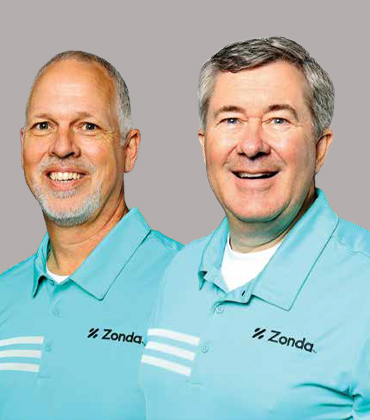
Across the country, school districts are facing a new kind of planning challenge—one shaped by shifting housing markets, unpredictable enrollment trends, and rising pressure to spend public dollars wisely. In this landscape, traditional forecasting methods just aren’t enough. What districts need today is a deeper kind of insight. Not just about how many students might enroll, but where they’ll live, when they’ll arrive, and what that means for long-term facility planning. That’s where Zonda Demographics steps in. Zonda is known in the real estate world for its best-in-class housing data—used by builders, developers, and lenders to track where new homes are going, what they’ll cost, and how communities are evolving. Zonda Demographics takes that same housing intelligence and brings it to the world of public education. With roots in both real estate and school district planning, the Zonda Demographics team brings together two powerful skill sets: deep data analysis and firsthand experience in K–12 facility planning. The result? A unique service that helps school districts make confident, informed decisions about boundaries, bond planning, and long-range growth. “We bring a level of visibility that many school districts just don’t have internally,” says Bob Templeton, vice president. “We help them see the full picture—where development is happening, how fast families are moving in, and what that means for enrollment in the next one, three, five, or even ten years.” A Platform Built on Real-Time Housing Data Zonda’s data platform is unlike anything else in the education space. It tracks housing starts, lot development, and new construction activity at a hyperlocal level—updated weekly and verified by real people on the ground. District leaders can visualize exactly where homes are being built and match that to enrollment zones, bus routes, or long-term facility plans. They can filter for specific builders, zoom in on aerial photos of neighborhoods under construction, or look at deed records to see how quickly homes are closing. This is not just about maps or spreadsheets. It’s a living, breathing snapshot of growth across the communities a district serves.
STEM Schools

Inspiring the Next Generation of Innovators
Elizabeth Taylor, Director, STEM Center, Milwaukee School of Engineering
Public Schools

Building a Culture of Belonging in Co-Curricular Activities
Jason Alexander Knighton-Johnson, Director of Educational Equity, Mounds View Public Schools
Catholic Schools

Transforming Student Transportation with Equity and Strategy
Maureen Edozie, Director, Finance & Business Operations - Transportation, The School District of Philadelphia
Pre-Schools

The Progressive Integration of Technology in Education
Eva Harvell, Director of Technology, Pascagoula-Gautier School District
Boarding Schools
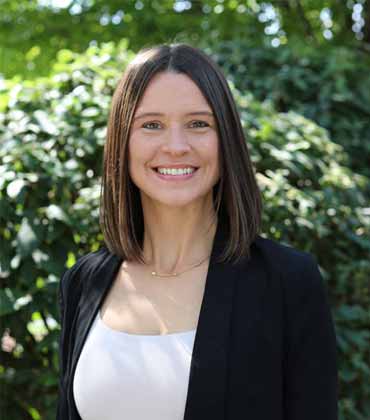
Where People Thrive Rethinking Talent Development in Higher Education
Mariah Shelden, Director, Talent Development, Grand Rapids Community College
Public Schools

Beyond Online Courses Designing the Modern Digital Classroom
George Hanshaw, Director of Digital Learning Solutions, Los Angeles Pacific University
Student Services

Rethinking the Digital Campus Through Mobility
Troy Hahn, Vice President for Finance & Administration (interim), AVP Chief Information Officer, Queens College
IN MY OPINION
Charter Schools
Designing with AI: Why Instructional Designers Still Need Human Mentors
Melody Buckner, Associate Vice Provost, Digital Learning and Online Initiatives, University of Arizona
LAST WORD
Student Services
Human Centered Learning in a Digital Age
Dr. Jenn Miller, Dean of Academic and Student Engagement, Lake Erie College
IN FOCUS

Evolving Strategies: How Public Charter Schools Are Navigating a Competitive Landscape
Public charter schools are evolving through strategic positioning, resource discipline, and accountability, driving stable enrollment, stronger community alignment, and sustained educational relevance.
Vocational Education Systems: Supporting Industry-Ready Technical Skill Development
Vocational schools strengthen workforce readiness, improve practical skills, support technical learning, and connect education more closely with changing industry needs.
EDITORIAL
Building Education for Real-World Outcomes
Our cover story, Hunter Business School, recognized as the Top Vocational School 2026, reflects the growing demand for education models centered on employability rather than tradition. By aligning programs with workforce needs in healthcare and technology, the institution has built a system focused on accelerated learning, hands-on training and employer engagement. Its expansion into nationally accessible online education reflects the broader shift toward flexible, outcome-driven career preparation.
This issue also highlights organizations reshaping education through differentiated approaches to student development and institutional access. Chicago Math and Science Academy, recognized as Public Charter School of the Year 2026, has built a student-centered framework that combines STEM rigor with emotional well-being, family engagement and real-world exposure. Northwest Christian School, recognized as the Private Christian School of the Year 2026, has expanded the reach of faith-based education through scalable hybrid and online learning models that maintain mission consistency while improving accessibility. St. Peter’s Catholic School, recognized as Top Catholic School 2026, continues to strengthen its role in faith-centered education through personalized instruction, early childhood expansion and a disciplined academic structure grounded in long-standing Catholic values.
Beyond institutional profiles, this edition also features perspectives from education leaders navigating operational and technological transformation. Eva Harvell, Director of Technology at Pascagoula-Gautier School District, explores the growing importance of cybersecurity, digital responsibility and student data protection. At the same time, Maureen Edozie, Executive Director of Transportation at The School District of Philadelphia, examines how transportation strategy directly influences equity, attendance and student access.
Together, these stories reflect an education sector increasingly defined by adaptability, measurable impact and institutional clarity of purpose. We invite you to explore this edition of Education Insider and the leaders building learning systems to prepare students for sustained success in a changing world.

