

In the rolling hills of Sussex County, New Jersey, there is a school where faith is not just part of the curriculum but woven into the very fabric of the community. Pope John XXIII Middle School stands as a testament to what it means to educate the whole child academically, spiritually, and socially. It is a place where students not only learn but are encouraged to grow into their fullest selves, embracing both their unique gifts and their responsibility to the world around them. For Susan Santore, the principal of Pope John XXIII Middle School, the school’s mission is clear. “We are a Catholic school, and with that comes a responsibility not just to educate, but to form students in the image of God,” she shares with passion. “Our goal is to create a space where students grow not only in knowledge but in compassion, integrity, and faith. That is what makes us unique.” What makes Pope John XXIII truly stand apart is its deeply embedded sense of community, nurtured by a faith-based ethos that guides both students and teachers. It is not just about getting through the school day. It is about learning with purpose, supporting one another, and living out the school’s core values. For students here, the journey is just beginning.

A child often enters a small classroom burdened by years of frustration—reading poses a challenge, numbers do not make sense, and self-assurance feels unattainable. Within weeks at Heritage Christian Academy, that same child grows more comfortable, begins discussing Scripture, and gains confidence. Scenes like this reflect the heart of the academy’s work, where faith, patience, and individualized attention shape the entire learning experience. "I never imagined I would open a school, yet God made it clear this was my assignment. He sends the children who are meant to be here, and my role is to meet their needs with care and conviction," says Ann Matlock, the founder and a teacher at Heritage Christian Academy. A Place Built on Purpose and Faith Heritage Christian Academy was founded on the belief that learning thrives when students have a clear sense of God’s purposes for their lives. With over two decades of experience, Ann observed that students often face overwhelming pressure and receive information faster than they can process. Many lack time to ask questions or develop essential skills..
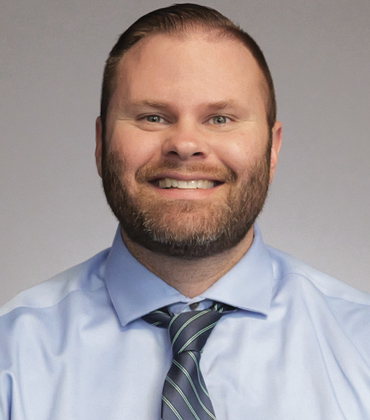
Career readiness is shifting, and skilled trades are leading the change. What was once treated as a post-graduation option is now being discovered much earlier. As the demand for qualified trade professionals continues to grow, students and families are asking a new question, “Can a high school actively accelerate young people into meaningful careers before they even turn eighteen?” Ohio Construction Academy (OCA) answers with a decisive yes. A tuition-free, career-driven technical education high school, OCA redefines what a community-serving institution can be. Serving students in grades nine through twelve, from ages fourteen to twenty-one, it integrates rigorous academics with hands-on workforce training across four essential construction trades: carpentry, electrical, welding and plumbing. Students graduate not only with a high school diploma, but also with the skills, credentials and experience required to move directly into the workforce, higher education or registered apprenticeships. “Students clock in, contribute, get paid and earn school credit all at once,” says Matthew Demosky, director of high school operations. Over eight years at the academy, Demosky has served as dean of students, principal and now director, providing leadership continuity that has helped the program mature and scale. From Tuition-Free Training to Industry-Valued Credentials OCA removes financial barriers that often prevent students from pursuing skilled trades. Students can earn between eight and ten professional certifications, including OSHA, CPR and First Aid credentials. In the open market, those certifications can cost upward of $20,000. At OCA, they come at no cost to the student. The academy also provides personal protective equipment, including safety glasses, boots and hard hats, allowing students to focus fully on learning in a safe, professional environment..
For thirty years, Cherry Creek Academy has stood as a testament to what becomes possible when students, parents, and educators move in tandem toward a shared mission. As a Core Knowledge charter school serving kindergarten through eighth grade, it has built a legacy not only on academic rigor but also on an uncommon depth of connection, one that shapes both the school’s identity and the futures of its students. From the beginning, the school has been anchored in its founding belief that exceptional education requires partnership. This is not a slogan at Cherry Creek Academy; it is the operational backbone of the school and the lens through which every decision is made. As Annemarie Mahan, Elementary Principal, explains, “Our students are incredible, staff is dedicated, and parents are involved and that partnership is what makes our community so special.” The school’s Core Knowledge approach offers families a transparent, coherent curriculum that outlines exactly what students learn at each stage. This clarity allows parents to actively support learning at home while also reinforcing the school’s expectation that academic growth is a shared endeavor. Motivated students, responsible parents, and exemplary teachers form what the team often refers to as its educational “triangle,” a dynamic structure that guides instruction, culture, and long-term planning. Families often choose Cherry Creek Academy for its academic rigor, but they stay because they see their children growing as whole people. Many members of the school community began as parents and later became employees or board members, a reflection of how deeply people connect with the school’s mission..
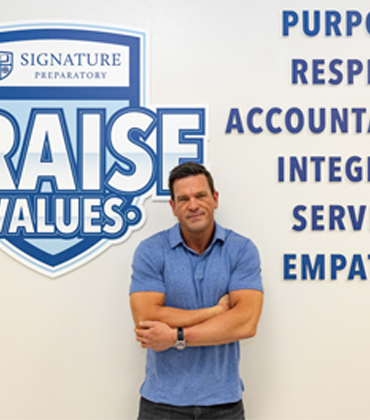
Standardized tests and academic performance alone take center stage in today’s educational landscape. Success is often measured by these scores, with everything from college applications to job opportunities hanging in the balance. But there has been a growing realization that this approach misses the bigger picture and that education should be delivered in a more well-rounded way. That is where Signature Preparatory offers a refreshing alternative. Located in Henderson, Nevada, this charter school is built on the premise that education should serve the entire child, not just the intellect, but also character, behavior, and preparedness for the real world. “We have set a new standard for holistic education by prioritizing values alongside academics and fostering real-world skills from an early age,” says Gabe Shirey, the school’s founder and executive director. Setting a New Standard for Holistic Education The focus on whole-child development is what sets Signature Preparatory apart from many other schools. It is also a reflection of its leadership. Shirey’s journey to founding the school was not rooted in a traditional education background, but in a desire to provide his own children with a better educational experience. As a father dissatisfied with the public school system, he decided to take matters into his own hands and create a school that prioritized both academics and life skills..
Test Prep and Tutoring Services

Enriching Public Education with Equity and Collaboration
Dr. Sandra Lochhead, Director of Schools, Denver Public Schools
Programs and Curriculum

Social-Emotional Learning: The Frame That Holds the Portrait of a Graduate
Statia Paschel, Director of Social Emotional Learning and Cultural Proficiency & Inclusiveness, Austin Independent School District
Education and Admission Consulting

Leading Schools by Staying Close to Learning
Ben Barlow, School Administrator, Albuquerque Public Schools
Catholic Schools

Cultivating Equity and Belonging Through Student Leadership
Kyra M. Caldwell Templeton, Program Director of Student Engagement & Co-Advisor of the APS Student Advisory Council, Atlanta Public Schools
Catholic Schools

Social Emotional Support for Young Children
Dr. Lauren Starnes, Chief Academic Officer, the Goddard School
IN MY OPINION
Test Prep and Tutoring Services
Reimagining Learning in a Digital World
Dr. Darren Draper, Administrator of Technology and Digital Innovation, Alpine School District

LAST WORD
Christian Colleges
Reframing Fidelity Toward Freedom in Teaching
Rebecca Tompkins, Director of Curriculum, Sycamore Community Schools
IN FOCUS
Charter School Innovations Reshaping Global Education
Charter schools drive public education reform by pioneering data-driven instruction, adaptive learning, flexible structures, and mission-driven cultures—innovations now widely adopted to improve student achievement and school effectiveness.

The Role of Private Christian Schools in Promoting Justice and Sustainability Worldwide
Private Christian schools now prioritize social responsibility, integrating sustainability, justice, and civic engagement into their mission to develop compassionate, principled leaders for a complex, global society.
EDITORIAL
Designing Schools Cultures that Turn Learning into Leadership
Pope John XXIII Middle School, our cover feature, exemplifies this transition from education as performance management toward education as formative design. By integrating academic rigor with daily character formation and a strong sense of belonging, the school advances a defining hypothesis: purpose and identity are not supplemental to learning; they are the mechanisms through which students build resilience and long-term leadership capacity.
The potential of this approach resonates throughout the issue. In CXO Perspectives, Kyra M. Caldwell Templeton of Atlanta Public Schools shows how embedding student voice into governance transforms social-emotional learning as a system-level driver of belonging and equity. This is complemented by Dr. Sandra Lochhead of Denver Public Schools, who illustrates how trusting students as partners and aligning curriculum with community engagement turn district strategy into outcomes felt daily in classrooms.
As we examine how schools are strengthening engagement and agency this month, a clear pattern emerges. The systems making progress are aligning culture and student voice into daily practice. When learners are trusted as contributors and not recipients, education becomes more durable. In this next phase, trust is the result of intentional design.

Get the best of Education Insider delivered directly to you.
