


Tribal colleges in the U.S. began emerging in the 1970s as part of federal legislation that allowed Native American Tribes to establish their own institutions of higher learning. These colleges arose out of necessity because most Native American communities, especially those on reservations, were cut off from traditional higher education. As a result, these communities struggled to provide educational opportunities for their youth. Tribal colleges sought to fill that gap by providing culturally relevant education and vocational training while remaining rooted in the traditions and values of the Tribes they serve. San Carlos Apache College stands as a unique educational institution that fuses modern higher education with the deep-rooted cultural values of the San Carlos Apache Tribe. Nestled in the remote landscapes of Arizona, it serves as a vital bridge between contemporary academic learning and the preservation of Apache traditions. As one of the few tribal colleges in the United States, San Carlos Apache College is dedicated to providing accessible education to Native students while keeping the spirit of Apache heritage alive in its classrooms, curriculum, and community. Being one of 37 tribal colleges nationwide, and one of only three in Arizona, San Carlos Apache College serves the San Carlos Apache Tribe, a vibrant community of around 13,000 members, of whom approximately 10,000 live on or near the reservation. The College’s role as an educational pillar in this community cannot be overstated. It provides a space where students can learn, grow, and develop while staying connected to their heritage. Commitment to Apache Values in Every Aspect of Education Dr. Linda Sue Warner, who became president of San Carlos Apache College just over a year ago, has been instrumental in revitalizing the College’s vision and mission. A veteran in the field of education, Dr. Warner brings a wealth of experience to her role, having previously served as president of Haskell Indian Nations University. Under her leadership, San Carlos Apache College has focused on a holistic approach to education that blends academic rigor with cultural awareness. Dr. Warner emphasizes that one of the most important aspects of the college’s mission is to ensure that Apache culture and values are woven into the fabric of the institution.

Top Student Housing Services 2025
In student housing, management companies often get paid even when the owners lose money. This happens because they are compensated for revenue generated rather than overall performance of managing the asset; revenue and expenses. They typically earn a fixed percentage of rent collected, which means their income is tied to revenue, not overall profitability. This creates a misalignment of incentives: managers focus on filling beds and collecting rent, while owners focus on maximizing net operating income. As a result, management decisions often emphasize short-term occupancy targets instead of sustainable operational efficiency or resident satisfaction. On paper, revenue may grow, but rising costs and declining service can erode profit and long-term asset value. HH Red Stone was built to change that by treating residents like “owners” in daily operations. The company believes that when every resident is valued, heard, and respected, the real owner benefits most. Engaged residents renew leases, take better care of their spaces, and become advocates for the property, driving stable revenue and lowering turnover costs. To reinforce that alignment, HH Red Stone links its management fees directly to the Net Operating Income (NOI) goals agreed upon with property owners, ensuring both sides share in success or shortfall. When a property performs well, everyone benefits. When it has challenges, the management operator feels it as well. This shared-outcome model connects resident experience to operational performance, aligning efficiency, transparency, and profitability toward lasting asset value. For managers, success now depends on how smoothly a property runs after move-in. Owners see steadier margins and fewer surprises. Residents feel the difference in cleaner grounds and curb appeal, faster maintenance, and teams who know them by name. “Success isn’t this mysterious or magical thing that is beyond reach. It’s about doing what you said you were going to do—consistently, every single day. At HH Red Stone, we bring that same mindset to how we manage our communities. When owners, managers, and residents are all aligned, consistency turns into performance and that performance creates long lasting real estate value.” says Teddy Abdelmalek, Senior Vice President of Business Development at HH Red Stone.

Top Educational Management and Consultant Services 2025
Education has always carried a promise to help students discover what they’re capable of and how they can thrive beyond the classroom. Schools play a vital role in shaping that journey, yet the way they are structured often makes it difficult to respond to every learner’s distinct ambitions, interests and realities. With fixed curricula, standardized pathways and complex systems, the challenge isn’t a lack of care or effort, but a structure that wasn’t built with flexibility at its core. So what if that structure were reimagined? What if education bent to meet the learner instead of the other way around—by opening doors in ways that truly reflect the diversity of student potential? These are the questions Engaged Education, a full-service educational management and consulting partner was built to answer, by challenging the conventions of how schools are designed, supported and scaled. “Our focus has always been student-centered learning, building everything around the learner experience and meeting them where they are. We bring in resources from the community, the state and beyond to support each family and learner in a way that’s truly personalized,” says Dr. Angelina Zeller, president and CEO. A Model That Breaks the Mold Engaged Education’s model begins with designing academic experiences that are customized to the student. Instead of funneling all learners through a singular academic path, the company partners with schools to design programs that reflect the needs, goals and pace of the student population. This individualized approach builds confidence and engagement at every level. A key enabler of this model is curriculum agility. While many institutions are locked into limited content partnerships, the company sources curriculum globally from traditional materials to AI- powered platforms. Every selection is guided by what a specific learner or institution requires, ensuring programs remain relevant, rigorous, and unbounded by outdated resources.
Physical Education Products Manufacturer of the Year
In every gymnasium, playground, and field where students learn, laugh, and move, physical education (PE) is doing something extraordinary. It’s building stronger bodies, sharper minds, and laying the foundation for a healthier future. Few subjects reach students in so many dimensions — physical, cognitive, and social — all at once. Physical education isn’t just about fitness; it’s about developing confidence, building skills, fostering teamwork, and encouraging lifelong healthy habits. Decades of research back what educators have long known: movement matters. Active students perform better academically, manage stress more effectively, and develop essential social-emotional skills that reach far beyond the walls of a gymnasium. PE is where many students experience the pure joy of play, the thrill of competition, and the discovery of what their bodies can do. And for more than 75 years, Gopher has been behind the scenes striving to help make those moments possible. Focused on Education, Dedicated to Teachers While Gopher’s products can be found in recreation centers, afterschool programs, and fitness facilities nationwide, the company’s heart and core purpose are rooted in education. Schools — and the educators who inspire movement within them — are the primary focus. Understanding the needs of physical educator is at the center of what Gopher does. The company’s stated purpose, “Helping the heroes who teach and coach achieve better results,” reflects a belief that the company exists to support the educators who strive to make movement matter for every student - and to play a small part in helping to make their jobs easier, more effective, and more rewarding. From sponsoring national and state PE organizations to honoring outstanding educators through the national Teacher of the Year Award for Physical Education, Gopher’s commitment to the field extends well beyond supplying equipment. The company invests time and resources into listening to teachers, understanding their daily challenges, and working to responded with meaningful solutions. Gopher recognizes that today’s educators face far more than the challenge of finding quality gear. Space, time, and student engagement can all be daily hurdles, among others. That’s why the company is driven to provide a simple, hassle-free experience — from streamlined ordering to on-time delivery and high-quality equipment designed to last.

Test Prep and College Advising Services
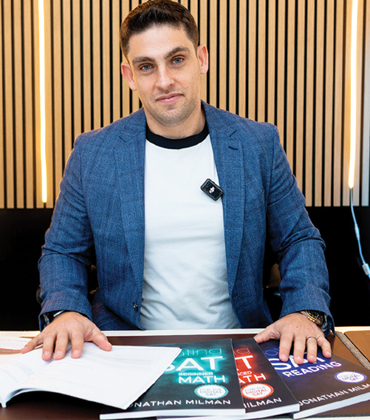
Brooklyn, N.Y. — The Thursday Night Strategy Session A ninth-grader leans over a conference table beside her parents. Across from them sits a Student Success Manager from Infinite Academics, Brooklyn’s most talked-about tutoring and college prep center. The discussion isn’t about homework or grades—it’s about how her brain works. A custom report from a cognitive functioning test outlines how she processes information, retains data and manages time. Within minutes, her roadmap for the year begins to form. From SAT prep to essay deadlines, each element is tailored precisely to how she learns. “We drive our students to succeed by understanding how each of them learns first, and then building everything around that,” says Jonathan Milman, founder and CEO. Step 1 — Cognitive and Academic Diagnostic Before any tutoring begins, students complete a comprehensive cognitive functioning test—a deep diagnostic that evaluates memory, reasoning and learning preferences. Step 2 — Personalized Plan From those results, the company builds a personalized academic profile that drives every decision that follows: tutor matching, study structure, pacing and even test-day strategies. Each plan is rooted in data and shaped around the student’s natural cognitive style.
Top School Principals - 2025
Jenna McIntosh is a seasoned education leader with experience in advancing student-centered learning and school leadership at St. Anthony Catholic School. She began her journey as a middle school math teacher, bringing firsthand classroom experience before transitioning into leadership roles. Since becoming the principal of St. Anthony in 2022, McIntosh has established herself as a trusted voice in fostering academic excellence, faith-based leadership and community engagement. A respected educator and mentor, McIntosh shares perspectives shaped by her classroom experience, influential principals and a deep commitment to Catholic education. The Transition from Teaching to School Leadership McIntosh’s journey at St. Anthony began in December 2014, at a time when she was exploring opportunities beyond the classroom while pursuing a master’s degree in organizational learning and leadership. When the school reached out, she accepted it as a short-term arrangement. However, then-principal Terry Maus became an important mentor who encouraged her to stay. Within a year, St. Anthony had reignited her passion for education and deepened her commitment to Catholic schooling..
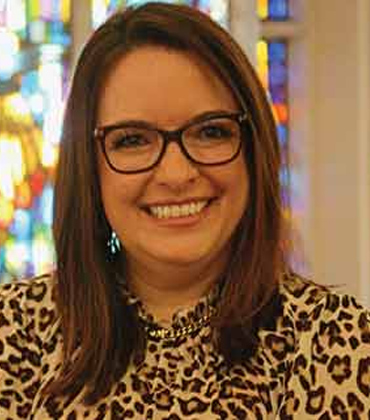

Every child deserves to feel seen, valued, and supported in their school. That belief has guided Ashley Hanlon throughout her career as an educator and school leader. Today, as Elementary School Principal at Grand Isle School within the Grand Isle Supervisory Union in Vermont, she continues to build a culture rooted in belonging, curiosity, and compassion. Her leadership blends structure with empathy, reminding everyone that schools thrive when relationships come first. Here is our conversation with her. A Journey Built on Belonging My journey in education has always come back to one simple truth: every child deserves to feel like they belong. I started out as a special educator working with high school students who did not always fit into traditional classrooms. Many of them faced challenges that went far beyond academics. They needed adults who could look past their behavior and see the story underneath— someone willing to ask why instead of what is wrong. Those early years changed me. They taught me to notice small victories, to lead with curiosity instead of judgment, and to meet every student with compassion. I learned that inclusion is not just about access; it is about creating spaces where every learner feels safe, capable, and celebrated for who they are.
Community Colleges

Impact of College Accreditation on Healthcare Programs
Kelly Cummins, Director Polysomnography Technology/Instructor Respiratory Care, Southeast Community College
Community Colleges

Methods to Integrate Diversity and Flexibility in Modern Educational Leadership
Amber Pleasant, Program Director - Adult Education and English Language Learning, Aims Community College
Community Colleges

Teaching at the Crossroads: How AGI Will Reshape Education, and How We Can Shape It Too
Gerry White, Dean of Academic Technology, Department Chair of Arts and Sciences, Professor of English, and eSports Coach, ECPI University
Community Colleges

Bridging History, Leadership, and Opportunity
Mitzi Ramos, LARES Associate Director of Graduate Student Professional & Career Development, University of Illinois Chicago
Community Colleges

Innovative Strategies for Global Education and Assessment
Dr. Eric A. Canny, Assistant Teaching Professor of Education, University of Southern California

IN MY OPINION
Community Colleges
Bridging the Gap: Lessons from a Decade of Student Financial Aid Administration
Haley Lindsey, Director of Financial Aid, Missouri Western State University

LAST WORD
Community Colleges
Employing Technology to Coordinate Diversity, Equity & Inclusion Efforts Across Campus
Monica N. Burnette, Ph.D., Vice President, Student Services, Seton Hall University
IN FOCUS
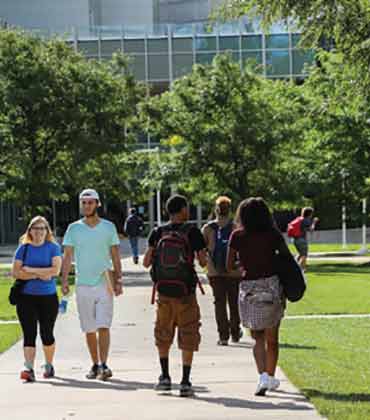
The Policy-Driven Future of Community Colleges
Community colleges are evolving into vital economic engines, supported by government funding aligned with workforce development, sustainability, and student retention initiatives, enhancing their relevance and stability.
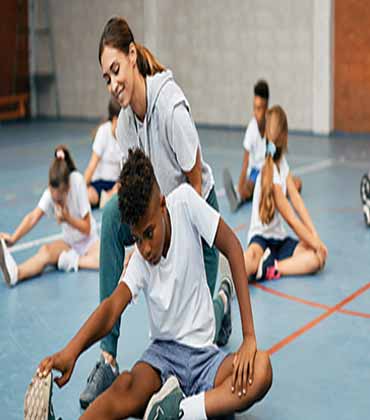
The Evolution of Student Wellness Through Physical Education Manufacturing
Physical education equipment is evolving from a focus on athleticism to one that enhances emotional regulation, social skills, and mental health through cooperative play and mindful activities.
EDITORIAL
Building Holistic Education Ecosystems for Student Success
Community colleges are collaborating with housing and technology partners to deliver safe, affordable living spaces for students. Facilities now feature secure access, study lounges, digital reporting systems and meal plans designed around active student lifestyles.
Educational management and consulting services are equally important in shaping this evolution. These firms are helping institutions align curriculum design, accreditation, staffing, technology adoption and student support models with the demands of a more adaptive, accountable and future-ready educational ecosystem.
Physical development is emerging as a major pillar of student success as well. Manufacturers are introducing engineering-driven products that support athlete conditioning, youth physical development and inclusive fitness experiences on campus.
This edition of Education Insider highlights the trailblazers advancing holistic education. It features thought leadership articles from domain experts, including Kelly Cummins, director polysomnography technology and respiratory care instructor at Southeast Community College. She elaborates on the impact of college accreditation on the credentials of graduates from healthcare programs run by educational institutions. Gerry White, dean of academic technology, department chair of arts and sciences, professor of english, and eSports coach at ECPI University, warns that while AI offers unprecedented convenience, human curiosity and critical thinking needs to be deliberately preserved.
The cover features San Carlos Apache College, an Arizona-based tribal college that blends modern education with Apache cultural values to provide a unique learning environment for Native American students.
We hope this edition gives you crucial insights into how the leaders in education are integrating personalized learning support, well-designed living environments and modern physical education resources to build complete learning ecosystems that prepare students for life.

